

Trusted source of coastal cottages for over 10 years

Professionally managed and regularly inspected

Book securely with the property manager
Northumberland has some of the best beaches in England. The coast is known for its long stretches of sand, endless dunes, fishing villages, islands, castles and long walking routes. This is definitely not a coast full of amusement arcades and crowded promenades. It’s better suited to beach walks, castle visits, wildlife, dog-friendly holidays and days that combine sand, paths, villages and pubs.
The Northumberland Coast Path links many of the places in this guide, including Cresswell, Warkworth, Alnmouth, Craster, Seahouses and Bamburgh. St Oswald’s Way also follows part of the coast, starting on Holy Island before heading inland across Northumberland.
Dogs are allowed on many Northumberland beaches throughout the year, but it’s still worth checking signs when you arrive. Some areas have local dog control rules, and there are places where dogs should be kept on leads because of birds, livestock, dunes or protected habitats.
Bamburgh Beach
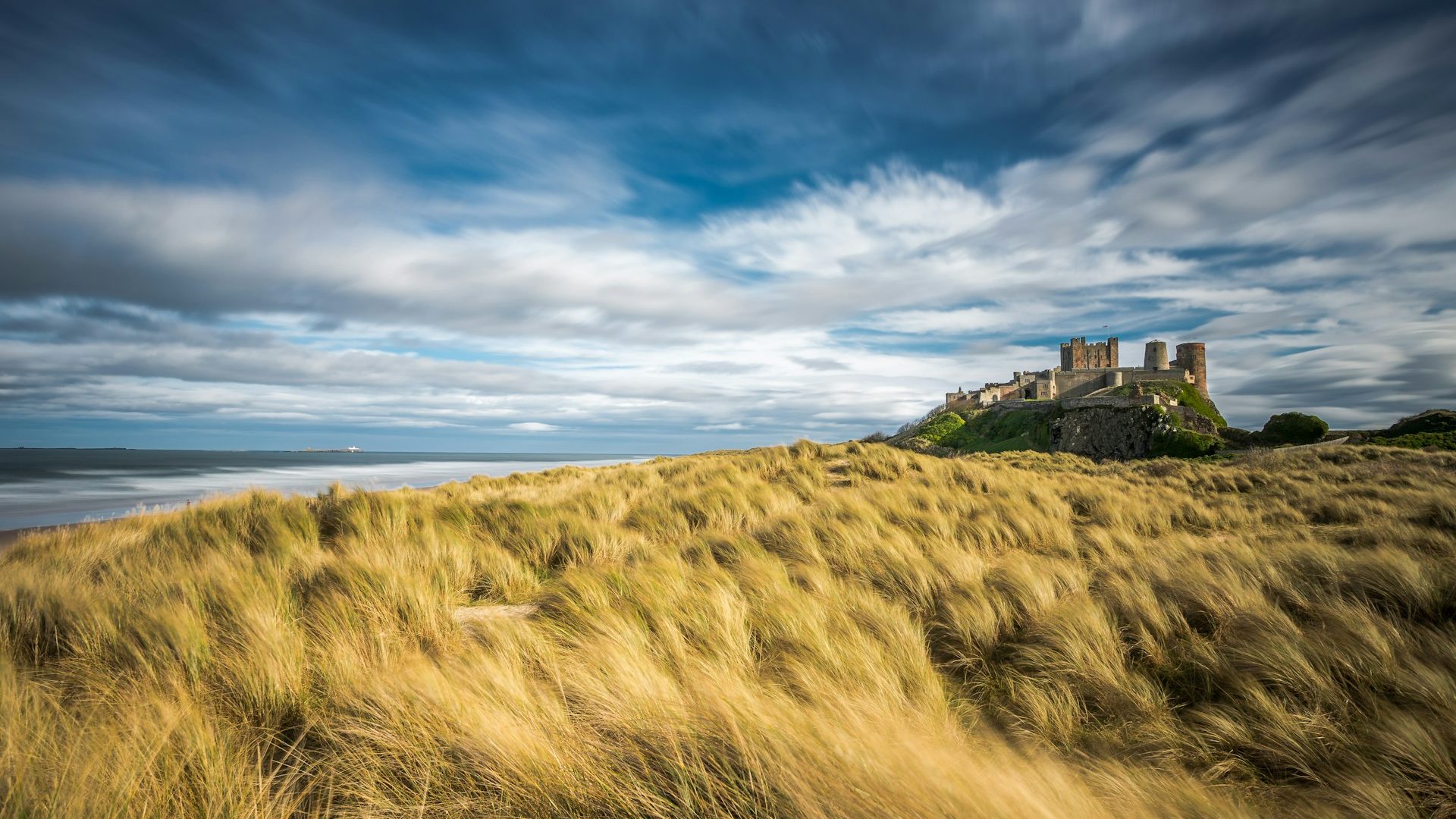
Bamburgh is the classic Northumberland beach view: a huge sweep of sand with Bamburgh Castle above the dunes. The beach is wide, open and backed by grassy dunes, with views across to the Farne Islands on clear days.
Bamburgh works well for a beach walk because the sand is wide, the views are clear and the castle is within sight for most of the route. You can walk north towards Budle Bay, where the sands and mudflats are important for birds, or south towards Seahouses. The walk between Bamburgh and Seahouses is around 3 miles one way if you follow the beach and coast path sections.
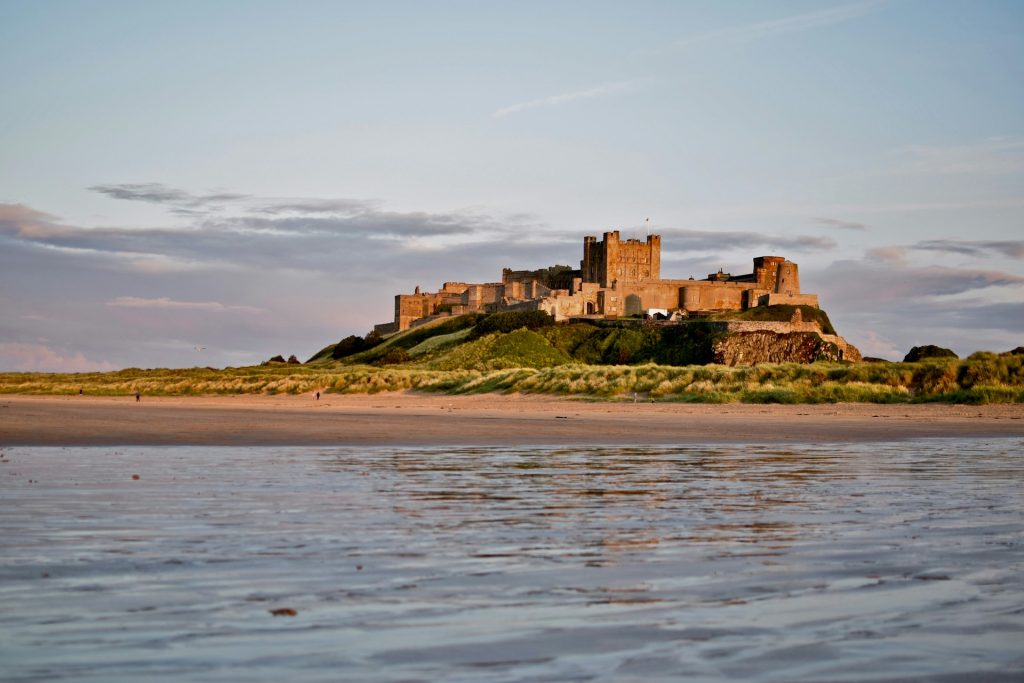
The castle is the main landmark. Bamburgh Castle stands on a basalt outcrop above the village and beach, and it dominates this part of the coast. The Grace Darling Museum is also in the village, telling the story of the local lighthouse keeper’s daughter who helped rescue survivors from the Forfarshire shipwreck in 1838.
Bamburgh Beach is also a good choice for dog owners. There are no major seasonal dog bans on the beach, but dogs should be kept away from nesting birds and under control around the dunes. The beach has plenty of space, which helps during busier months.
Seahouses Beach and the walk to Bamburgh
Seahouses is a good choice if you want a beach day with shops, pubs, fish and chips, boat trips and harbour activity nearby. It’s also the main departure point for boat trips to the Farne Islands, where visitors can see seals, seabirds and puffins in season, a great coastal activity for kids of all ages.
The beach north of Seahouses runs towards Bamburgh and gives you one of the best castle walks on the coast. Start near Seahouses harbour, follow the coast north and continue over sand, dunes and paths until Bamburgh Castle comes into view. It is an easy route to follow, with the sea on one side, dunes on the other and the castle straight ahead.
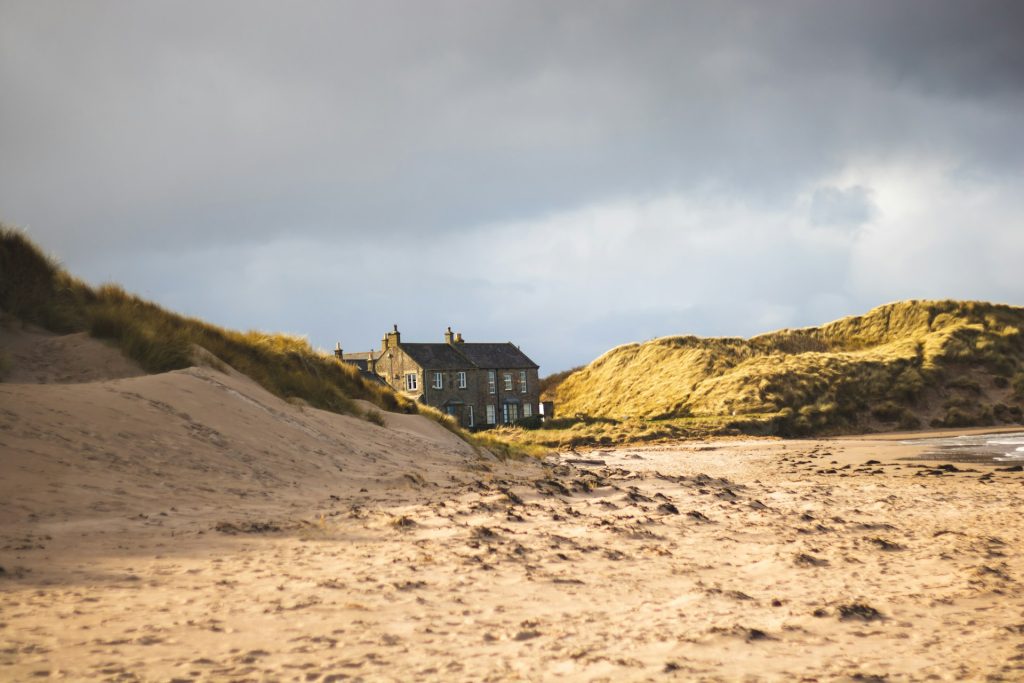
Seahouses also works for families because you can split the day between the beach, harbour and village. The lifeboat station, harbour walls and boat trips give the town more activity than smaller coastal villages such as Boulmer or Low Newton.
Dog friendly holidays in Seahouses are popular as the nearby beaches generally allow dogs, but check local signs when you arrive. If you are walking through dunes or near livestock, be sure to use a lead. Boat operators have their own rules for dogs on Farne Island trips, so check before booking.
Beadnell Bay
Beadnell Bay is one of the top Northumberland beaches for water-sports, open sand and long dog walks. The beach curves south from Beadnell village and is backed by dunes, with a harbour at the northern end.
The bay is popular for paddleboarding, kayaking, sailing and windsurfing, especially in calm weather and is popular for last minute coastal breaks. It’s also a good walking beach because the sand is broad and the setting feels open without being remote. From Beadnell, you can walk south towards Low Newton and Embleton Bay, or north towards Seahouses.
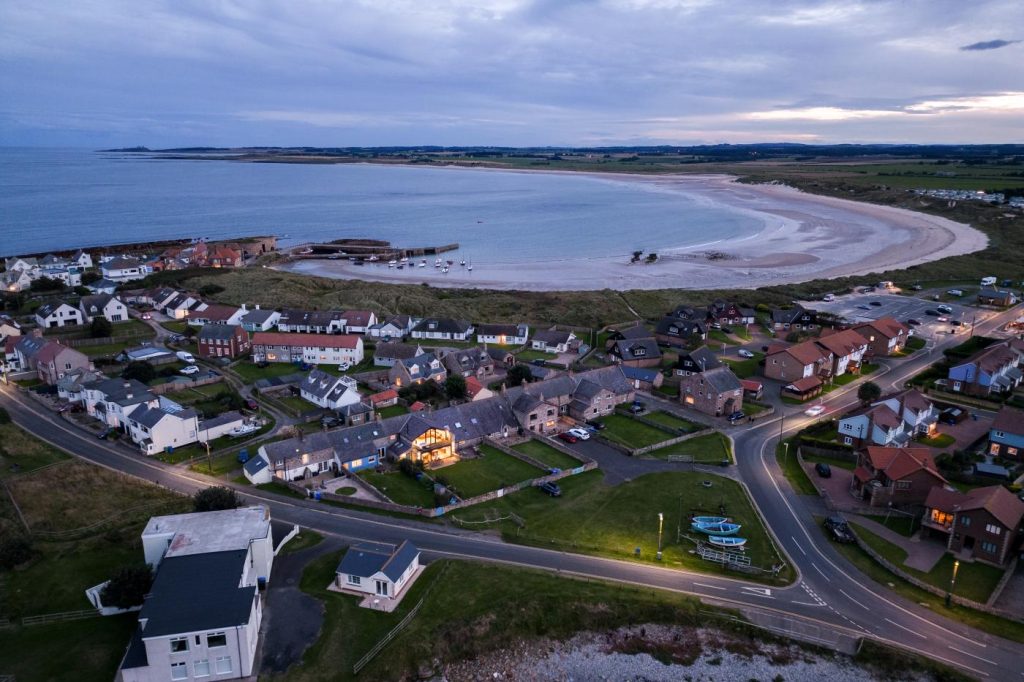
Beadnell Harbour is worth a look before or after the beach. It has 18th-century lime kilns and a small working harbour feel, with boats, stone walls and views back across the bay. The village has pubs and places to eat, making it an easy stop for a beach day.
Dogs are welcome on Beadnell Bay throughout the year, but you need to take care around the dunes and surrounding habitats. Keep dogs away from fenced-off areas and birds, and check signs during spring and summer when ground-nesting birds may be present.
Low Newton and Newton Haven
Low Newton is smaller and quieter than Bamburgh, Seahouses or Beadnell. The beach sits beside a square of whitewashed cottages and has views across the bay towards Dunstanburgh Castle.
Newton Haven is more sheltered than some of the exposed beaches further north and south. It suits a shorter beach walk, rock pooling at the right tide, or a longer route towards Embleton Bay and Dunstanburgh Castle.
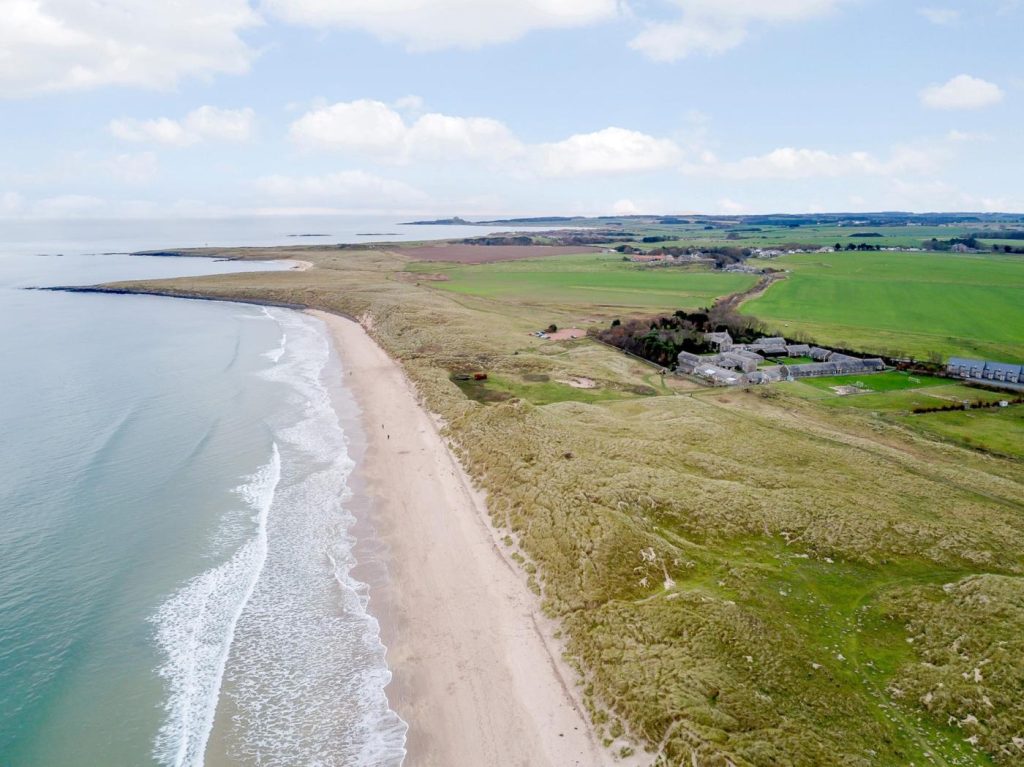
A good walk starts at Low Newton and heads south along the coast towards Dunstanburgh. You can also walk north towards Beadnell Bay. The Low Newton to Dunstanburgh route gives you beaches, dunes, castle views and open sea without needing to start in a larger town.
The Ship Inn at Low Newton is one of the best-known pub stops on this part of the coast. It’s close to the beach and often used by walkers coming through from Craster, Embleton or Beadnell.
Dogs are allowed on the beach, but this area has sensitive habitats. So you need to keep dogs under control near birds, dunes and any signed conservation areas.
Embleton Bay
Embleton Bay is one of the finest beaches on the Northumberland coast. The sand is wide, the dunes sit low behind the beach, and Dunstanburgh Castle stands at the southern end. It’s less developed than Bamburgh or Seahouses, which is part of the appeal.
The castle view is the reason many people come here. Dunstanburgh Castle is a ruined 14th-century fortress on a headland between Craster and Embleton. From the beach, the ruins sit above the shore, giving the walk a clear destination.
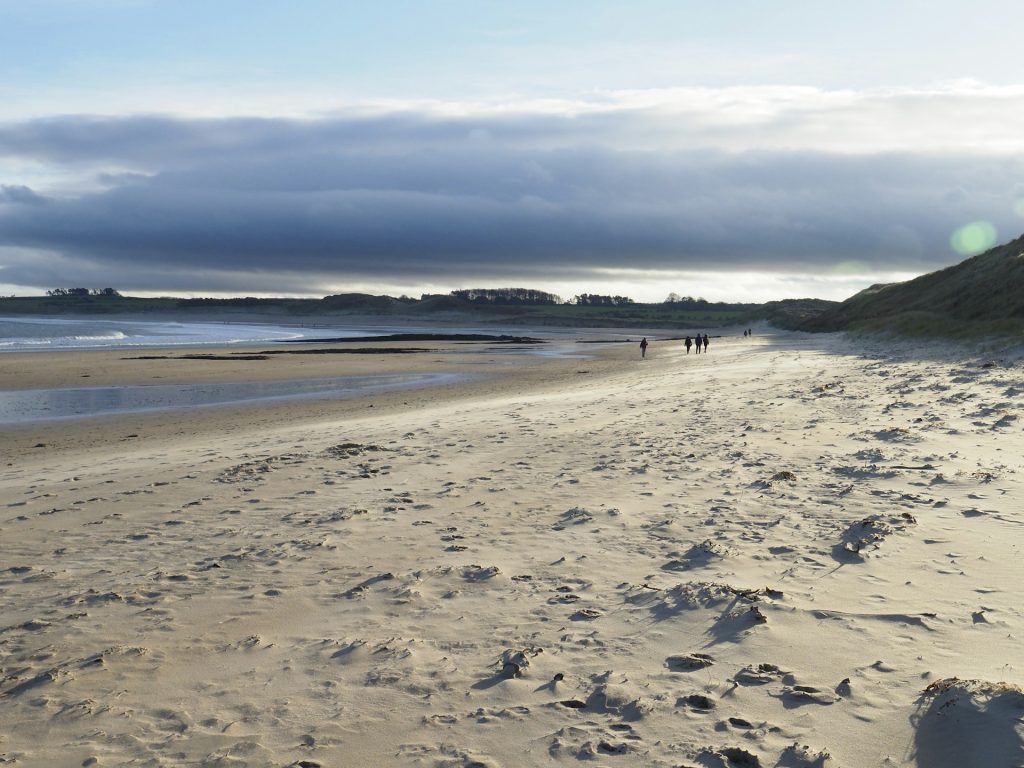
There are several ways to visit Embleton Bay. You can start from Embleton village and walk down through the golf course area to the beach. You can also walk from Craster to Dunstanburgh Castle and continue north to Embleton Bay. The castle is about 1 mile from Craster and about 1.5 miles from Embleton, so this part of the coast can be turned into a short walk or a longer route.
The beach is good for dogs, with plenty of space at low tide. Keep dogs on leads around livestock, golf course areas and castle approach routes if required. As with much of the Northumberland coast, watch for signs around birds and dunes.
Craster and the walk to Dunstanburgh Castle
Craster does not have a big sandy resort beach, but it belongs in this guide because it gives access to one of the best coastal walks in Northumberland. The village is known for its harbour, kippers and the path north to Dunstanburgh Castle.
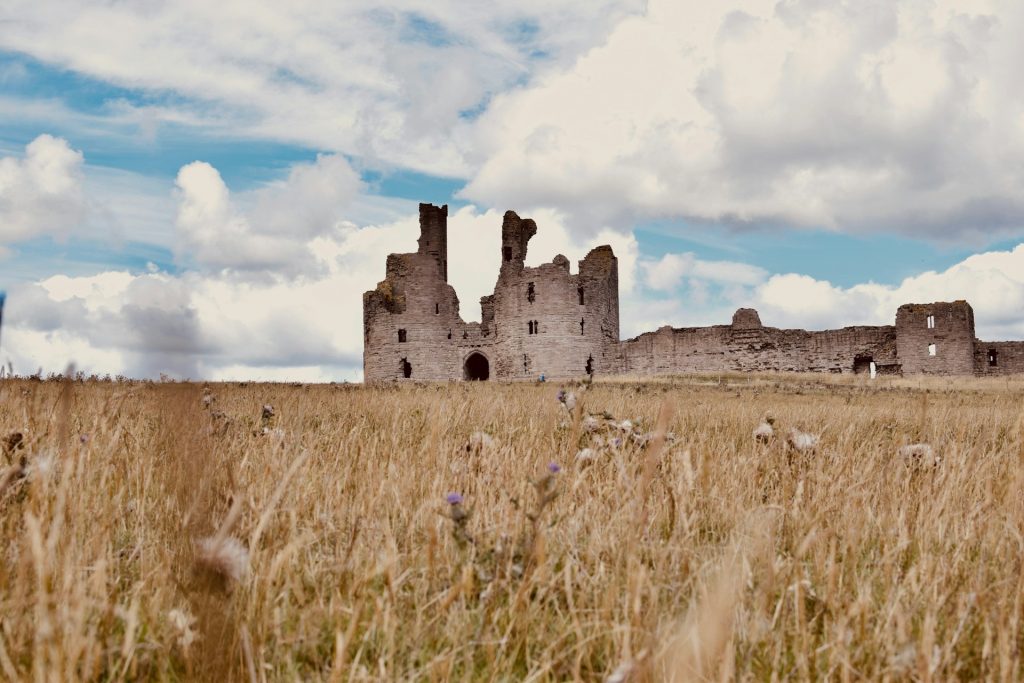
The walk from Craster to Dunstanburgh Castle is about 1 mile each way from the car park area. It follows the coast across open ground, with the castle ruins ahead for most of the route. Many walkers turn around at the castle, but it’s worth continuing to Embleton Bay if you want sand, dunes and a longer day out.
Craster itself has plenty of character. The harbour is small and sheltered, Robson’s smokehouse is closely linked with Craster kippers, and The Jolly Fisherman is a popular pub stop after the walk.
Dogs are often seen on the Craster to Dunstanburgh walk, but leads may be needed where there are sheep or cattle. Around the castle, follow any posted rules and keep dogs away from walls, cliff edges and livestock.
Alnmouth Beach
Alnmouth is one of the top coastal towns in Northumberland and has a wide sandy beach, a colourful village, an estuary setting and views across the River Aln. It’s a good Northumberland beach if you want sand, cafés, pubs and village streets in the same day.
The beach is good for walking because you can follow the shoreline, loop around the estuary or connect with longer routes on the Northumberland Coast Path. The village has cafés, pubs, galleries and small shops, so lunch or a drink can easily be added to the day.
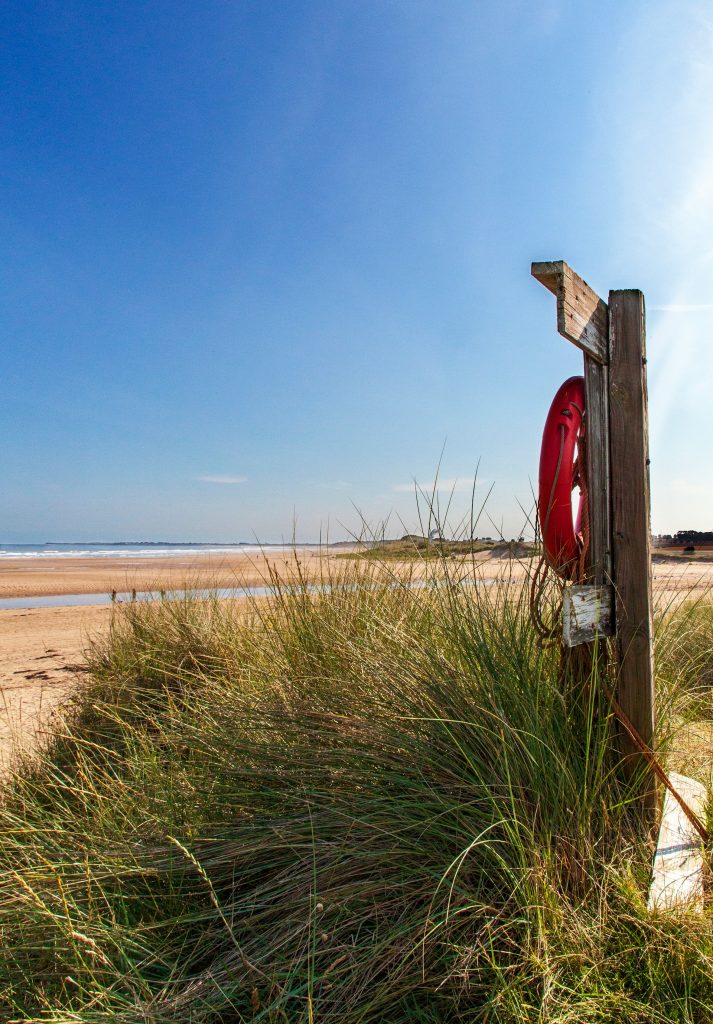
The estuary is one of the main things that makes Alnmouth different. The River Aln curves around the village before meeting the sea, creating views across sand, water and moored boats. At low tide, the beach feels broad and open. At high tide, you need to be more aware of your route around the estuary.
There is no major castle on the beach itself, but Alnwick Castle is only a short drive inland. That makes Alnmouth a good coastal base if you want to combine beach time with one of Northumberland’s best-known castles.
Dogs are allowed on Alnmouth Beach, but the estuary and dunes need care. Keep dogs away from birds and check local signs, especially around the estuary mouth and any protected areas.
Warkworth Beach
Warkworth Beach sits north of Amble and below the village of Warkworth, which is dominated by Warkworth Castle. The beach is wide, sandy and backed by dunes, with space for long walks even in busier periods.
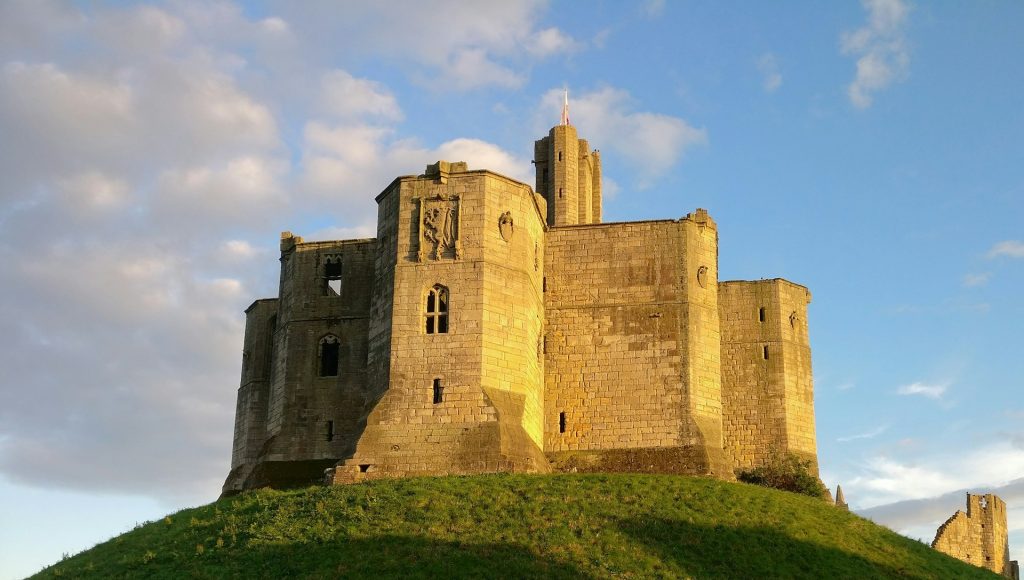
The best way to use Warkworth is to combine the beach with the village. Start at the village, visit Warkworth Castle, then walk down towards the beach or along the River Coquet. The castle stands above the village and is one of the key medieval landmarks on the coast.
The beach is also close to Amble, where the harbour, marina and seafood places add more to a day out. You can walk from Warkworth towards Amble or follow sections of the coast path south from the beach.
Dogs are welcome on Warkworth Beach, and the open sand gives plenty of room for a walk. Keep dogs under control around dunes, birds and livestock. The beach has a quieter feel than most town beaches, so a packed lunch or picnic is a good idea as there are less facilities nearby.
Druridge Bay
Druridge Bay is a long sweep of sand running for around 7 miles between Amble and Cresswell. It is one of the best beaches in Northumberland for people who want space, big skies and a long walk without many interruptions.
The bay is backed by dunes, nature reserves and Druridge Bay Country Park. The country park has a lake, woodland, meadows, parking and facilities, making it a good place to start if you are visiting with children or dogs.
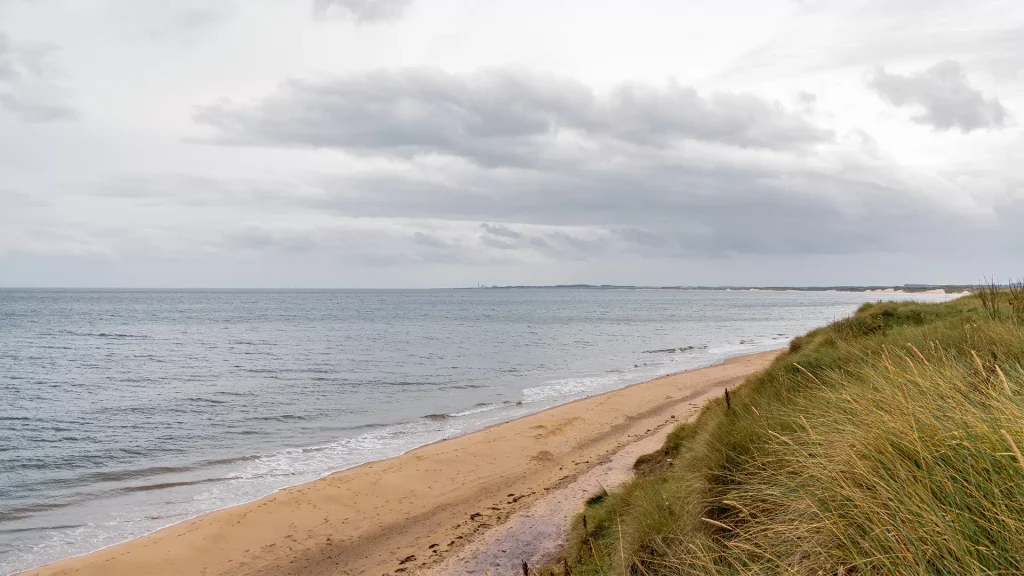
This is not a castle beach in the same way as Bamburgh or Embleton, but it’s excellent for walking and sea views. The scale is the main draw. You can walk a short section from the country park, head south towards Cresswell, or go north towards the Amble end of the bay.
Druridge Bay is also good for wildlife. The wider area includes Cresswell Pond, Hauxley Nature Reserve and East Chevington, all known for birds. If you are walking with a dog, keep well clear of birds and use a lead near nature reserves.
Dogs are allowed on much of Druridge Bay, but local signs should be checked at access points. The dunes and wildlife areas make responsible dog walking especially important here.
Holy Island beaches
Holy Island, also called Lindisfarne, is one of the most distinctive places on the North East coast. It’s reached by a tidal causeway, so crossing times control the whole visit. You must check safe crossing times before travelling and never cross when the tide is rising.
The island has beaches, dunes, village lanes, Lindisfarne Priory and Lindisfarne Castle. The castle sits on a rocky rise at the eastern end of the island, while the priory ruins sit closer to the village. Together, they make Holy Island one of the best places in Northumberland for history and sea views.
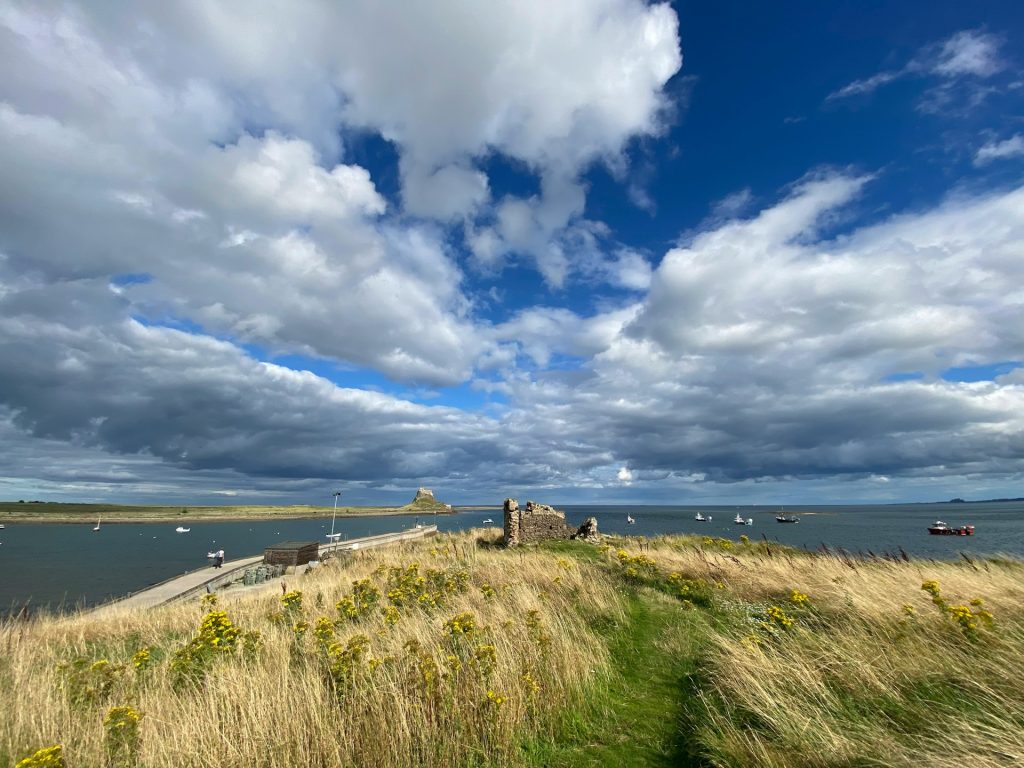
Walking on Holy Island can be short or long, depending on your plans and the tide times. A shorter route links the village, priory, harbour and castle. A longer walk can include the north shore, dunes and views back towards the mainland.
Dogs are allowed in many outdoor areas, but this is a sensitive island landscape with birds, livestock and protected habitats. Keep dogs on leads where signs ask for it and take extra care around the nature reserve areas. Also check whether dogs are allowed at specific attractions before you visit.
Planning a Northumberland beach day
Northumberland suits quieter beach holidays built around walking, castle visits, harbour stops and views rather than amusements or resort facilities. Bamburgh is the place to start if you want the main castle view. Craster to Dunstanburgh is the best walk if you want a clear route with a castle at the end. Beadnell is a good choice for water-sports, while Druridge Bay gives you the longest stretch of open sand.
Dog owners have plenty of choice, but check signs when you arrive. Some beaches are close to dunes, farmland, bird habitats or nature reserves, so leads may be needed in certain areas. For places to stay close to the North East coast, browse our collection of Northumberland coastal cottages before planning your next break.