

Trusted source of coastal cottages for over 10 years

Professionally managed and regularly inspected

Book securely with the property manager
Devon offers some of the most varied coastal walking in England. These walks are a great way to clear your head, with coastal scenery that changes every few miles. The north coast is rugged, exposed and shaped by the Atlantic, while the south coast is softer, more sheltered and interspersed with estuaries, coves and historic harbour towns.
This means nobody gets bored, with enough choice and variety to suit everyone’s mood and energy level. For families, it means the kids won’t be complaining or scrolling while they walk. You can plan a trip around destinations, highlights, gripping cliff drops, elevated views, quieter stretches of flatter estuary paths, or a combination of both.
The key is knowing where to go. Better still, many of these routes can be combined with other coastal activities in Devon, making it easy to create a varied and memorable day out. This guide focuses on the most rewarding sections of the Devon coast path, combining iconic stretches with lesser-known routes that are well worth exploring.
Woolacombe to Baggy Point, North Devon
Distance: approx. 4–5 miles round trip Terrain: Moderate, clifftop paths with some ascent
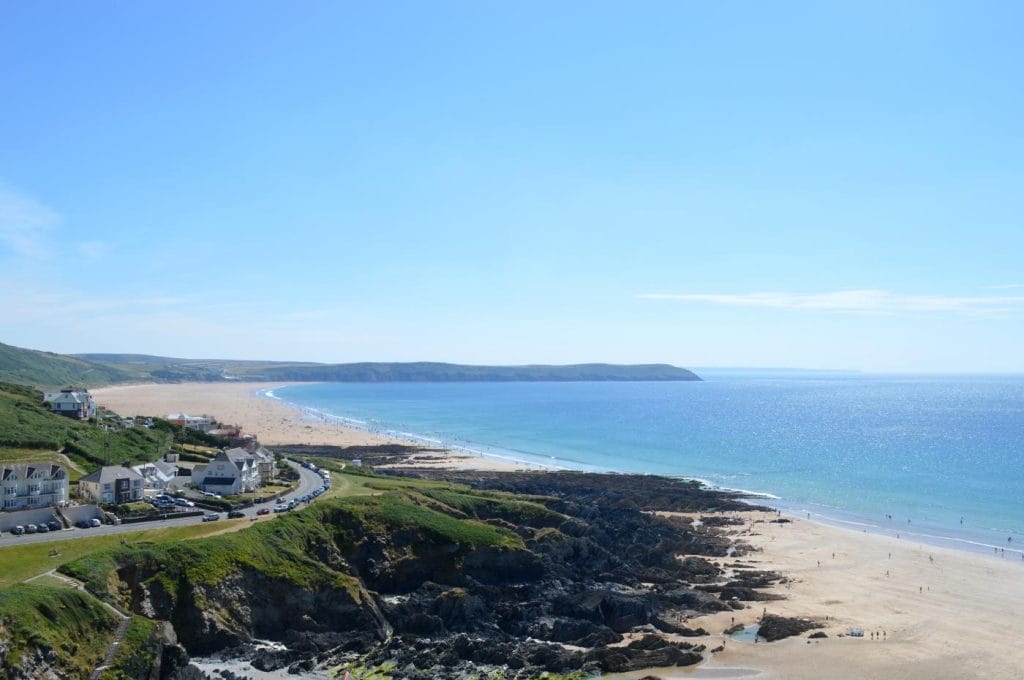
This is one of the best introductions to North Devon’s coastline. Starting at Woolacombe you could either walk the length of the beach first to take it all in, or start at the Baggy Point end with a gentle ascent. The path climbs gradually above the beach before following the headland towards Baggy Point. The views open quickly and stay with you throughout with Woolacombe Bay stretching out behind you, while ahead the coastline curves towards Croyde and beyond.
Now you could either walk back along the bay or walk around to Croyde Beach. If you choose the latter, in spring/summer you may spot seabirds nesting on the cliffs whilst in Autumn these birds start to gather for their migration. The terrain is well-defined but exposed, particularly in windy conditions. This is a walk for open horizons rather than shelter, as you can see for miles along the coast.
Hartland Quay to Speke’s Mill Mouth, North Devon
Distance: approx. 3–4 miles one way Terrain: Challenging, steep ascents and descents
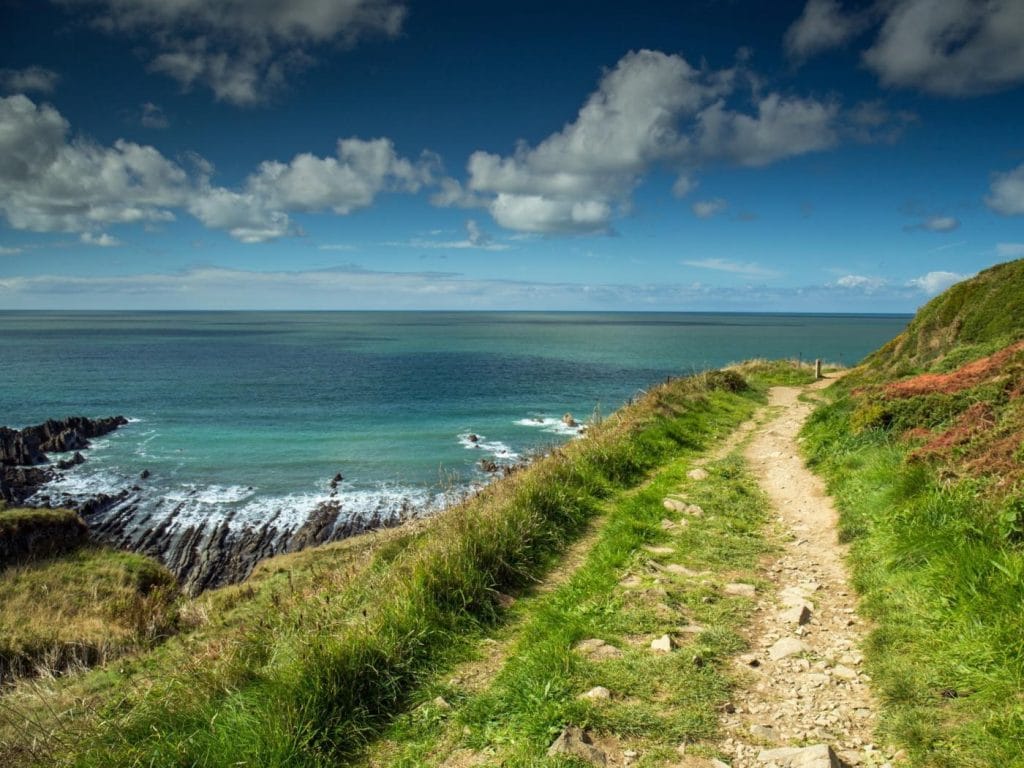
If you want dramatic coastal walking, this is where to come. This stretch south of Hartland Quay is one of the most rugged sections of the South West Coast Path. The cliffs are steep, the geology is striking, and the path rises and falls continuously.
This is not a casual stroll. It’s physically demanding, but the reward is a constantly changing landscape of rock formations, crashing waves and narrow valleys with waterfalls. The moment you lose sight of the sea, you are rewarded with something exquisite.
You follow a stream decorated by multicoloured flowers and wooded valley then Speke’s Mill Mouth provides a magical destination, where a waterfall drops onto the beach below surrounded by fascinating rock formations. It’s a remote and unforgettable location to spend time before heading back.
Croyde to Saunton Sands, North Devon
Distance: approx. 4 miles one way Terrain: Moderate via low route sandy paths and dunes, or challenging via the high route.
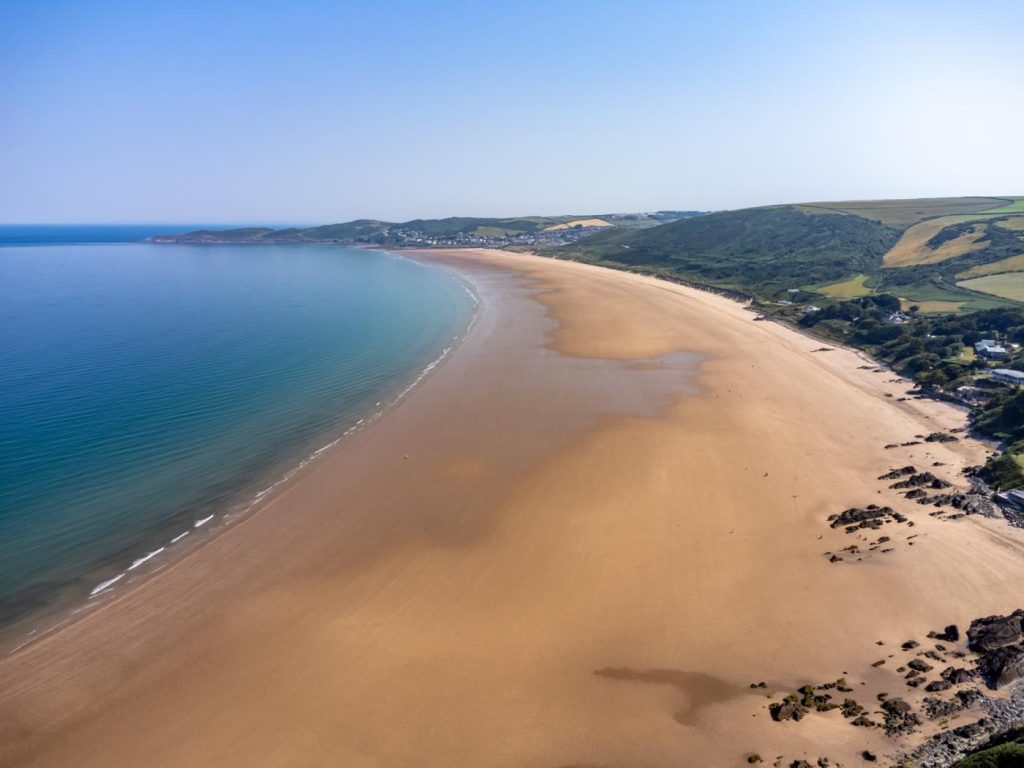
This walk combines two of North Devon’s best beaches, starting in Croyde. You can either take the high route via Saunton Down, or the low route, via the Braunton Burrows, where there are fewer sea views. The elevated route rewards you with breathtaking sea views across Bideford Bay, Croyde Bay and the Taw and Torridge Estuary.
Both routes are visually rewarding as you approach Saunton Sands, because the scale of the beach is awesome. This is one of the longest sandy stretches in the region, and the walk opens out into wide, uninterrupted ocean views.
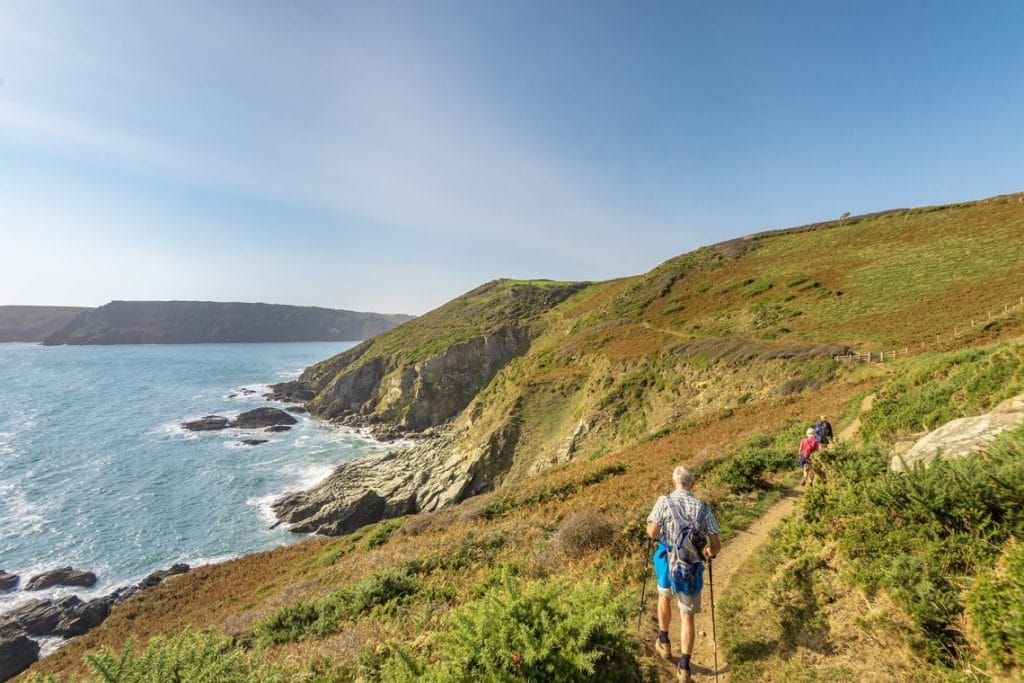
Salcombe to Bolt Head, South Devon
Distance: approx. 6 miles one way Terrain: Moderate, rolling coastal path
This is perhaps one of the most delightfully varied and ambrosia walks in South Devon. Leaving Salcombe along an idyllic path that climbs wooded tracks steadily above the estuary before reaching open coastline. From here, the views shift between secluded coves, wider sea horizons and landmarks such as The Rags, iconic rocky formations and outcrops.
The section approaching Bolt Head is particularly memorable, with elevated views back towards Salcombe and back across the English Channel. The terrain is varied but manageable, making it suitable for most walkers with a reasonable level of fitness. This route works well as a linear walk with transport arranged at either end, or as a return route for a longer day.
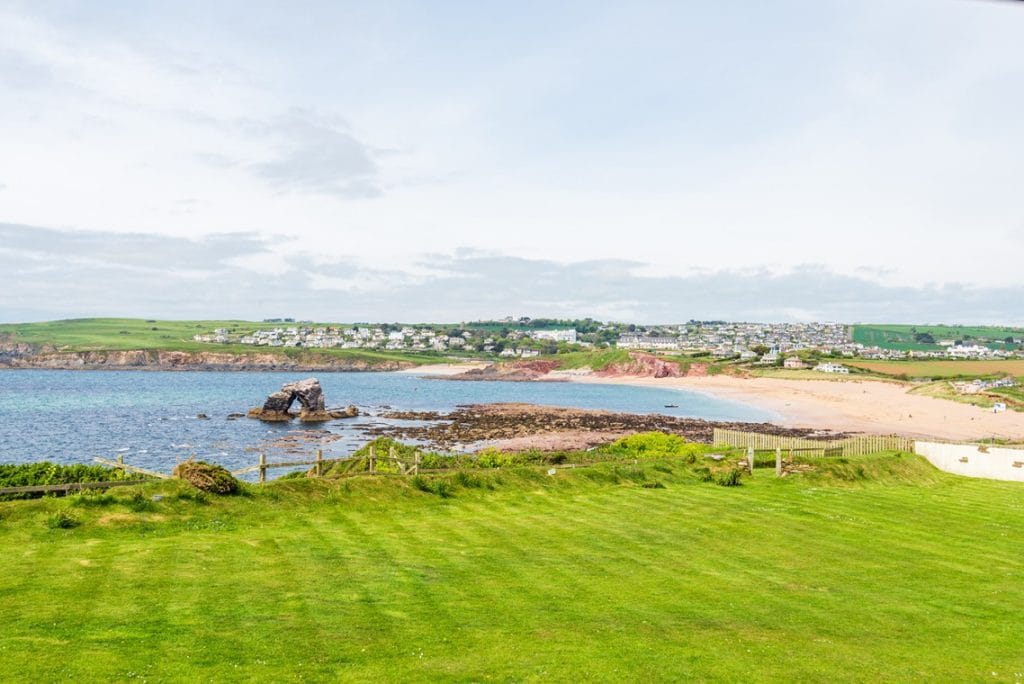
Hope Cove to Thurlestone, South Devon
Distance: approx. 2.5 miles one way/5 miles round-trip Terrain: Easy to moderate, well-defined paths
This is one of the most accessible and peaceful coastal walks in Devon with consistent sea views without the intensity of the north coast. The terrain is relatively gentle, making it suitable for families with little kids or those looking for a shorter walk.
Starting at Hope Cove towards Mouthwell Point over cliff top views of the expansive Thurlestone Sands, the highlight being Thurlestone Rock, a natural arch just offshore, which becomes visible as you approach the beach. It’s one of South Devon’s most recognisable landmarks. Hope Cove provides a good starting point, with parking, cafés and easy access to the path.
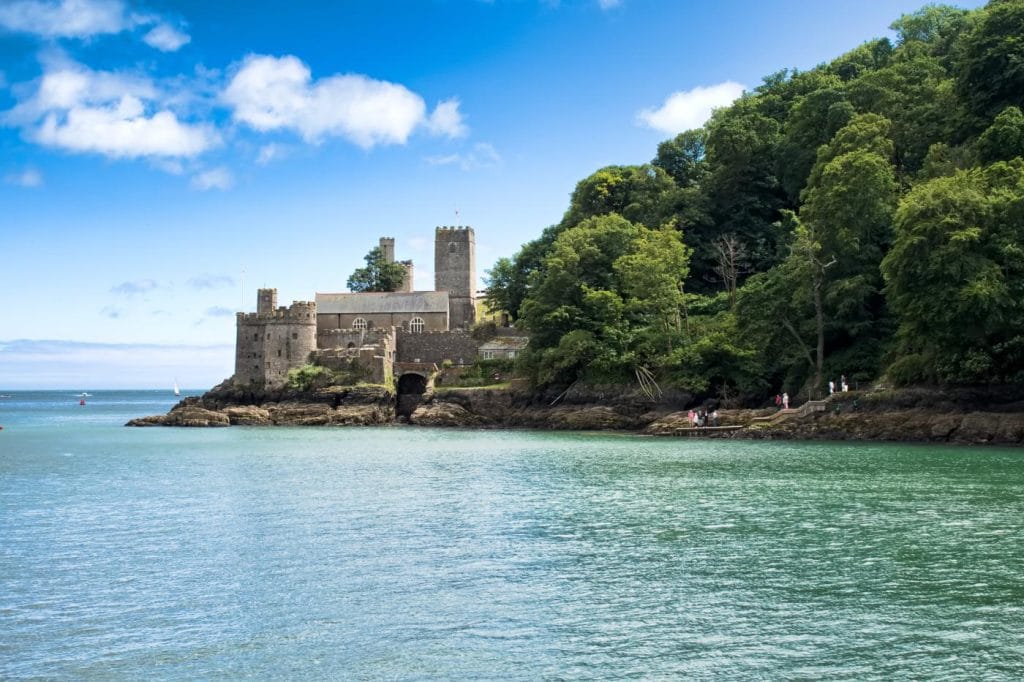
Dartmouth to Little Dartmouth and Compass Cove, South Devon
Distance: approx. 4 miles round trip Terrain: Moderate, woodland and coastal sections
This walk offers a different perspective on the Devon coast, starting near the castle of Dartmouth and climbing through wooded sections near Gallants Bower before the route opens out onto cliffs revealing gorgeous coastal views over Compass Cove.
This stunning, secluded bay with clear water gives a sense of isolation that contrasts sharply with the busy harbour you started from. This route works well as a half-day walk and is particularly good in warmer weather, when the coves become more inviting.
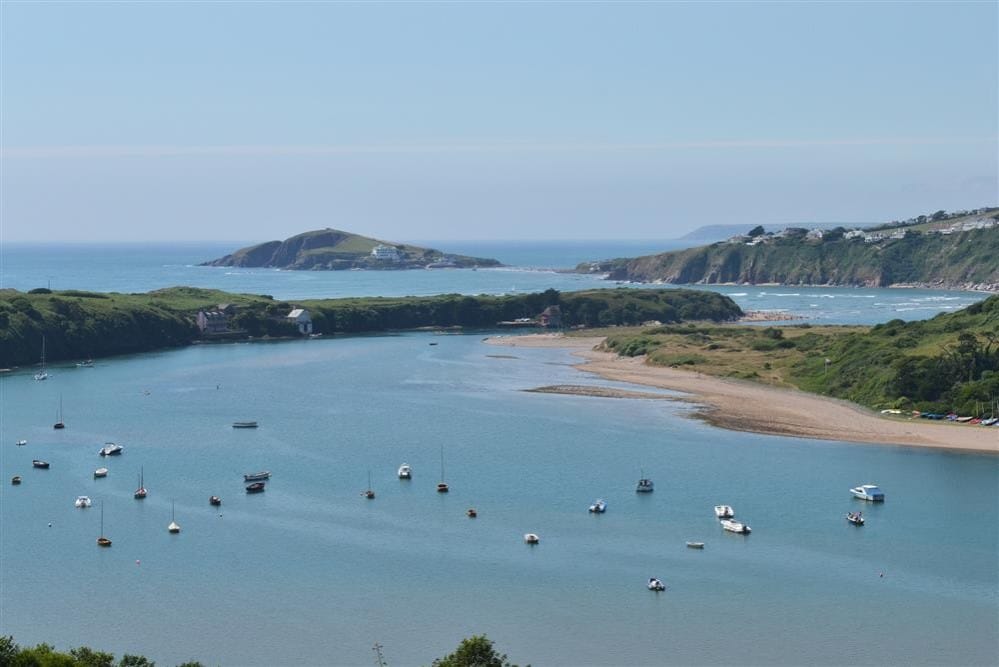
Bantham to Bigbury-on-Sea, South Devon
Distance: approx. 4 miles one way Terrain: Easy to moderate, estuary and coastal paths
This walk combines stunning estuary and coastal scenery more varied than any other and is an AONB. Starting at Bantham, the route follows the River Avon along sweeping sandy dunes and marsh filled with birdlife before reaching a lush open coastline path. The shift from calm estuary to exposed sea is gradual and totally enthralling.
Bigbury-on-Sea provides a natural end point, with views out to Burgh Island. At low tide, you can walk across the sand to the island itself, adding an extra element to the route. This is a good option for those looking for a less strenuous walk with breathtaking scenery.
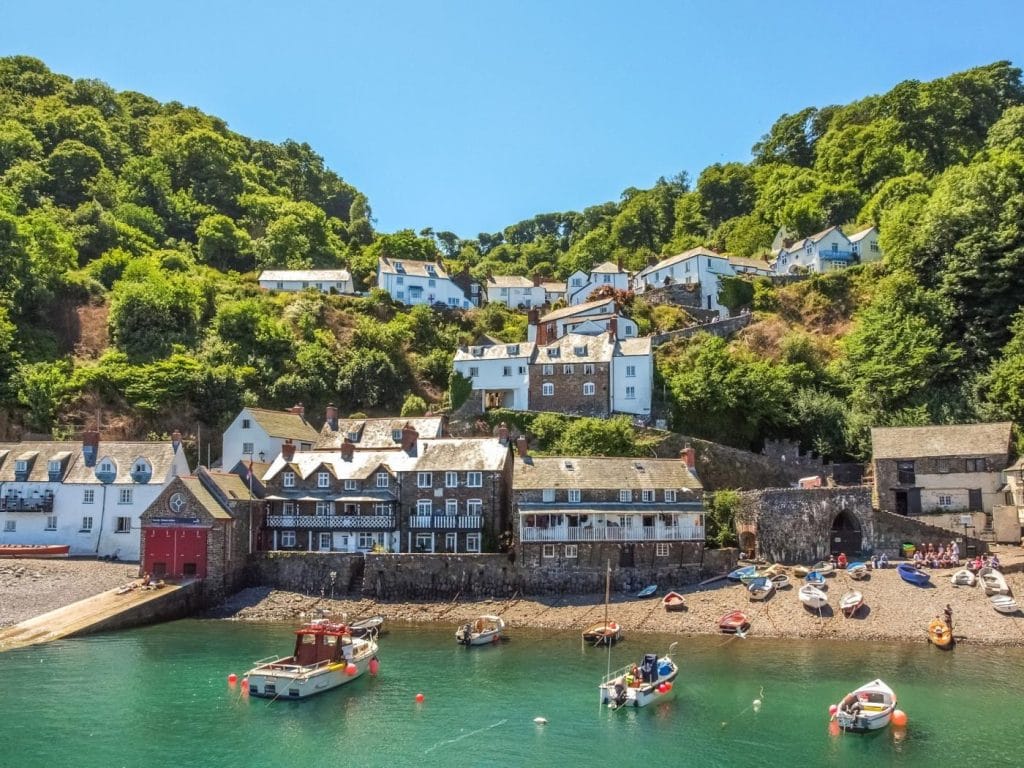
Clovelly to Mouth Mill, North Devon
Distance: approx. 3 miles one way Terrain: Moderate, steep sections
The historic fishing village of Clovelly is worth visiting in its own right, but walking from here adds a fabulous context. What follows is a magnificent contrasting mix of deep, ancient woodland and dramatic seascapes. The path drops down from the village before following the coastline towards Mouth Mill. This is a quieter stretch of coast, with fewer walkers and a stronger sense of isolation.
The highlight is Blackchurch Rock, a striking natural formation that stands just offshore. It’s one of the more unusual landmarks on the Devon coast and well worth the effort to reach. This walk is shorter but more intense, making it ideal as part of a longer stay in the area.
Planning a Devon Coastal Walking Holiday
With so many beautiful walks to choose from, deciding where to start can be difficult. However, the best walk isn’t always the longest. If it’s your first time exploring the area, opt for a route that combines varied scenery and terrain to give you a true flavour of the landscape.
Choosing the right base is just as important; stay somewhere that provides easy access to different trails, and you’ll soon discover why Devon offers some of the most rewarding walking holidays in the country. Alongside the spectacular scenery, many visitors also appreciate the benefits of being by the sea, from the fresh coastal air to the calming effect of spending time near the water.
Weather also plays a role. The north coast is more exposed and can feel dramatically different depending on conditions, while the south coast tends to be more sheltered and consistent. Devon accommodation close to the coast is essential. Being able to step straight onto the path makes a significant difference, particularly if you want to walk early or avoid peak times.