

Trusted source of coastal cottages for over 10 years

Professionally managed and regularly inspected

Book securely with the property manager
Dorset’s Jurassic Coast gives you fossil beaches, harbour towns, chalk cliffs, sandy bays and some of the best coastal walks in South West England. The Dorset stretch runs from Lyme Regis in the west to Studland in the east, with places like Charmouth, West Bay, Weymouth, Lulworth Cove, Swanage and Old Harry Rocks along the way.
This coast offers a variety of trips. Lyme Regis and Charmouth are best for fossil hunts, while West Bay and Burton Bradstock are good for cliff walks and big sea views. Weymouth works well for a sandy beach day with plenty to do nearby, with Lulworth Cove and Durdle Door being the main landmark stops. Swanage and Studland are ideal for beach days, steam trains, cliff walks and easy access to the Isle of Purbeck.
Dogs are welcome on many Dorset beaches outside the main summer season, but rules change from beach to beach. Always check local signs before going onto the sand, especially between May and September.
Lyme Regis
Lyme Regis is one of the best-known towns on the Jurassic Coast. It has a working harbour, beaches, fossil shops, museums, old streets and a seafront that’s easy to explore on foot. The town is closely linked with Mary Anning, the fossil hunter who found major marine reptile fossils in the cliffs around Lyme Regis in the early 19th century.
The Cobb is the main landmark. This curved harbour wall protects the harbour and gives views back across the town. It’s also linked with The French Lieutenant’s Woman, both the novel and the film. The Lyme Regis Museum is close to the seafront and covers local history, fossils, geology and details about Mary Anning’s life.
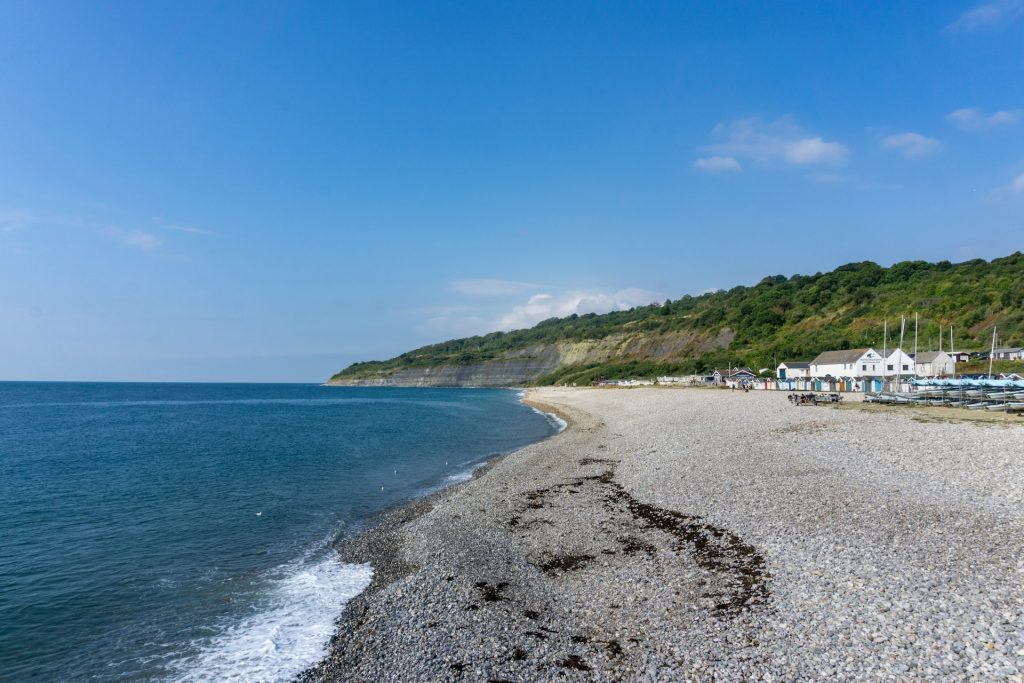
There are several beaches. The main sandy beach is the easiest for families and sits close to cafés, shops and toilets. Monmouth Beach, west of the Cobb, is shingle and pebbles, with fossil-rich rocks and the Ammonite Pavement visible at low tide. Church Cliff Beach sits east of the town and is another fossil-hunting area, but cliff falls are a real risk.
A simple walk is the seafront route from the Cobb to Church Cliff, with time for the museum and harbour. For a longer walk, Lyme Regis to Charmouth is around 3 miles one way on the coast path. The route has climbs, woodland, steps and cliff views. The beach route should only be attempted with local advice and the right tide.
Dog rules are mixed. Lyme Regis beachfront allows dogs from 1 October to 30 April. Monmouth Beach and Church Cliff Beach allow dogs all year. Check signs, as the rules vary by beach.
Charmouth
Charmouth is one of the main fossil-hunting spots on the Jurassic Coast and is considered one of the best seaside towns in Dorset. The village sits beside the River Char and has a beach split into east and west sections. The cliffs around Charmouth are unstable, which is one reason fossils are often found here. It’s also why you should stay away from the cliff base.
The Charmouth Heritage Coast Centre is the best place to start. It explains the local geology and runs guided fossil walks. That’s useful for beginners because fossil hunting is much safer when you know where to look and when to avoid the cliffs.
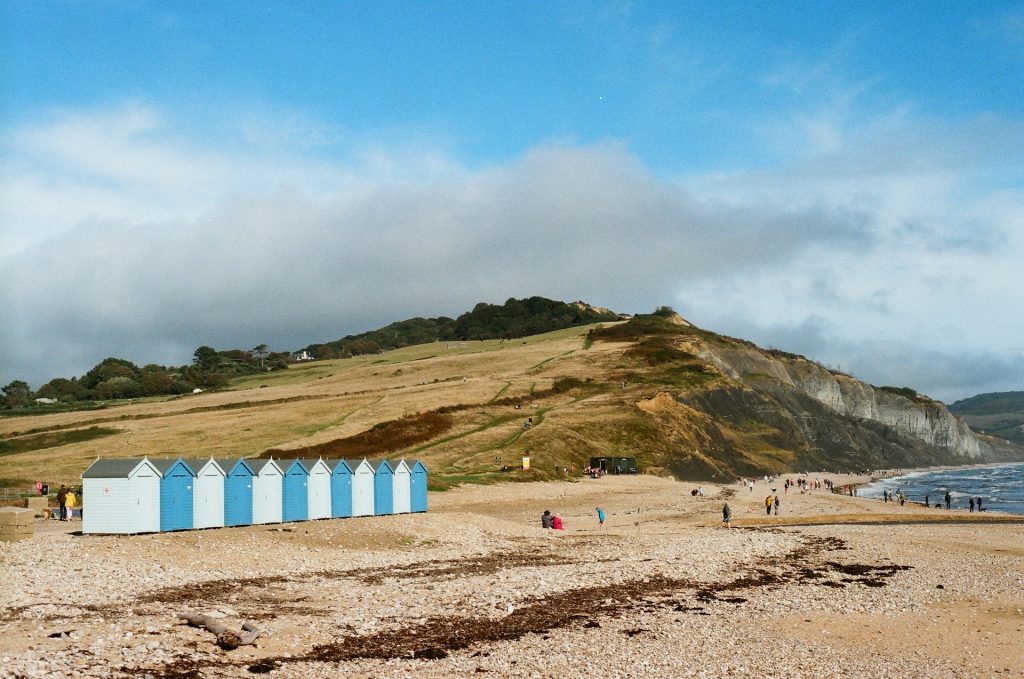
Charmouth East Beach is the usual starting point for fossil hunting. The safest place to search is on the beach after the tide has gone out, not in the cliffs. The west side of the beach has more restrictions and can feel different depending on the tide and weather.
For a short walk, use the beach and river area. For a proper coastal route, Charmouth to Golden Cap via Stonebarrow is one of the best nearby walks. Golden Cap is the highest point on the south coast of England, and the views cover Lyme Bay, West Dorset and the coast towards Devon. The walk is around 6 miles return from Charmouth if you go via Stonebarrow, with steep sections.
Dog rules vary across the beach. Charmouth East Beach has no formal dog restrictions. West Beach allows dogs from 1 October to 30 April but always check signs before setting off.
West Bay and Bridport
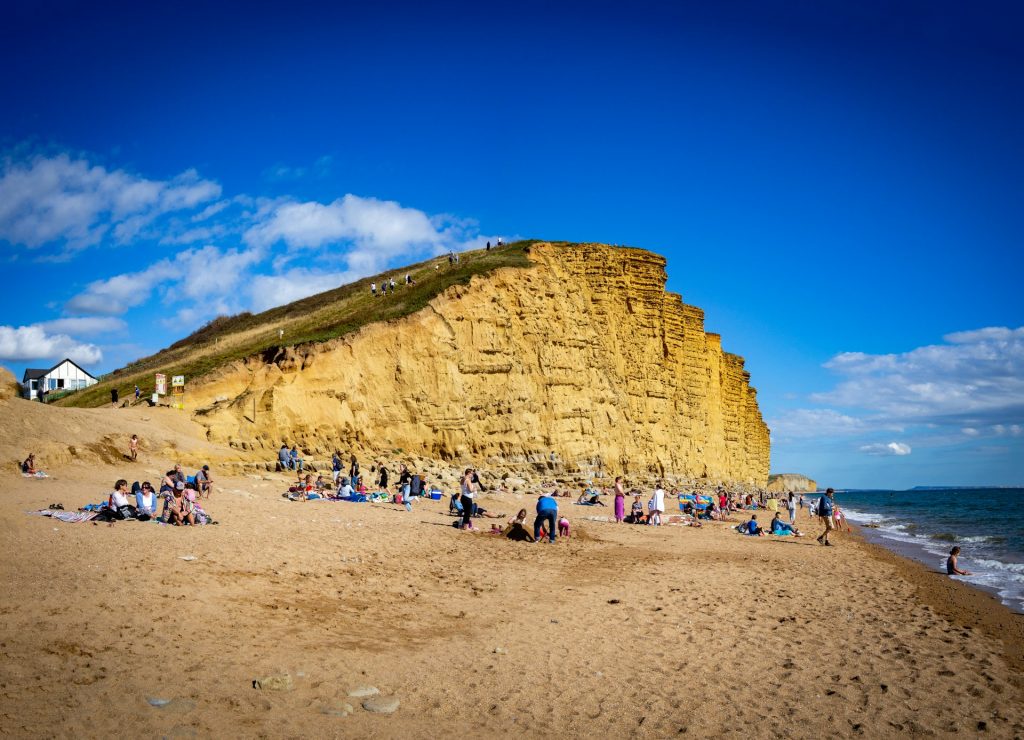
West Bay is the harbour area for Bridport and one of the most recognisable places on the Dorset coast. The tall golden cliffs on both sides of the harbour were used as a filming location for Broadchurch. The cliffs look impressive from the beach, but they’re unstable, so don’t sit or walk directly below them.
The harbour is the centre of West Bay. You’ll find fishing boats, kiosks, pubs, cafés and boat trips in season. East Beach sits below the cliffs and is shingle. West Beach is on the other side of the harbour and has shingle with sand at low tide. The beaches are better for walking, paddling and short stops than for long sandy beach days.
Bridport is about 1.5 miles inland and has independent shops, markets, cafés, pubs and a long rope-making history. The town’s street layout still reflects its old rope and net-making industry, with long plots behind the main streets.
The West Bay to Eype walk is around 2 miles one way. It climbs above West Cliff, then follows the coast towards Eype Mouth. It’s a short route, but the climb out of West Bay is steep. Another good route is West Bay to Burton Bradstock, around 2 miles one way along the coast, with views of Chesil Beach and the cliffs.
Dogs are allowed on West Bay beaches from 1 October to 30 April. In summer, dogs are allowed in the port on a lead, and one beach area separated by a large rock groyne is not restricted. Check the signs because the rules depend on the exact part of the beach.
Burton Bradstock and Hive Beach
Burton Bradstock is a village near Chesil Beach, with thatched cottages, old stone buildings and a beach backed by cliffs. Hive Beach is the main attraction and is made up of shingle rather than sand, with views across Lyme Bay and towards Golden Cap.
Hive Beach is popular for food as well as walking. The Hive Beach Café is a well-known local stop, especially for seafood. The beach works well for a shorter visit, a coastal walk or lunch by the sea rather than a full sandcastle day.
The cliffs around Burton Bradstock are made from soft rock and can be unstable. Keep away from the cliff base as rockfalls can happen without warning, even in dry weather.
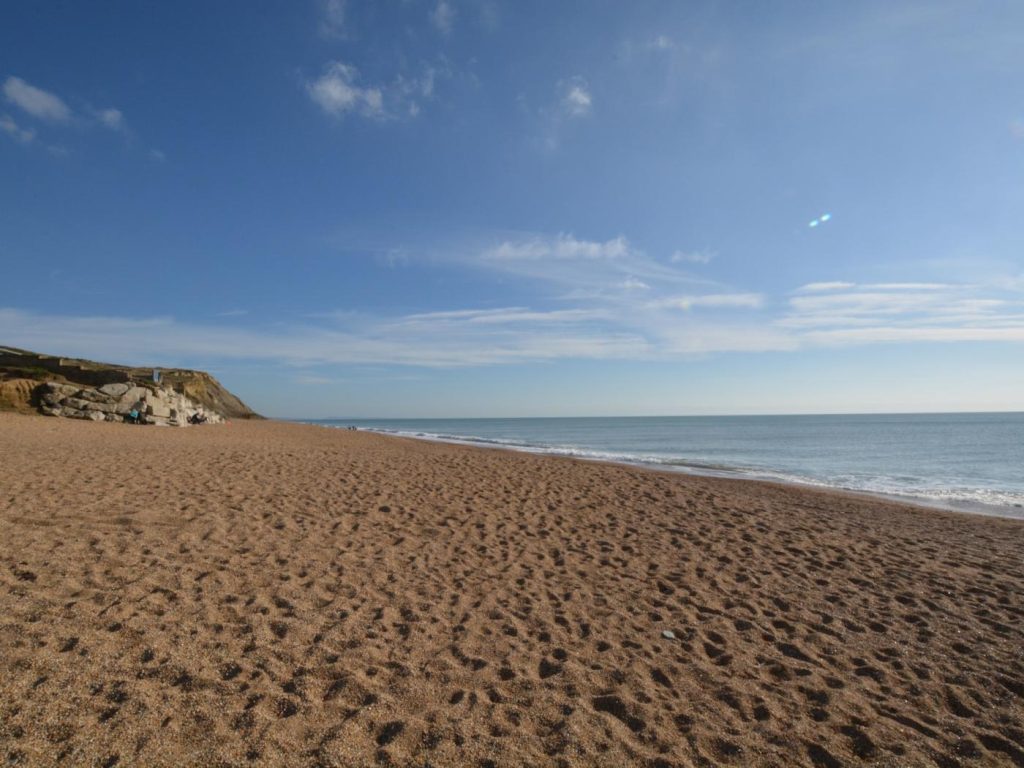
A useful walk runs from Burton Bradstock to West Bay. It’s around 2 miles one way and follows the South West Coast Path above the beach. The route gives clear views along the Jurassic Coast and works well as a half-day walk if you stop in West Bay for food.
For a longer route, walk west towards Cogden Beach or east towards West Bay and Bridport. Cogden is a quieter stretch of Chesil Beach, with shingle, open views and fewer facilities.
Dorset Council lists no formal dog restrictions for Burton Bradstock Beach, but the National Trust asks people not to exercise dogs on the beach between 1 May and 30 September. Cogden Beach allows dogs all year.
Weymouth and Portland
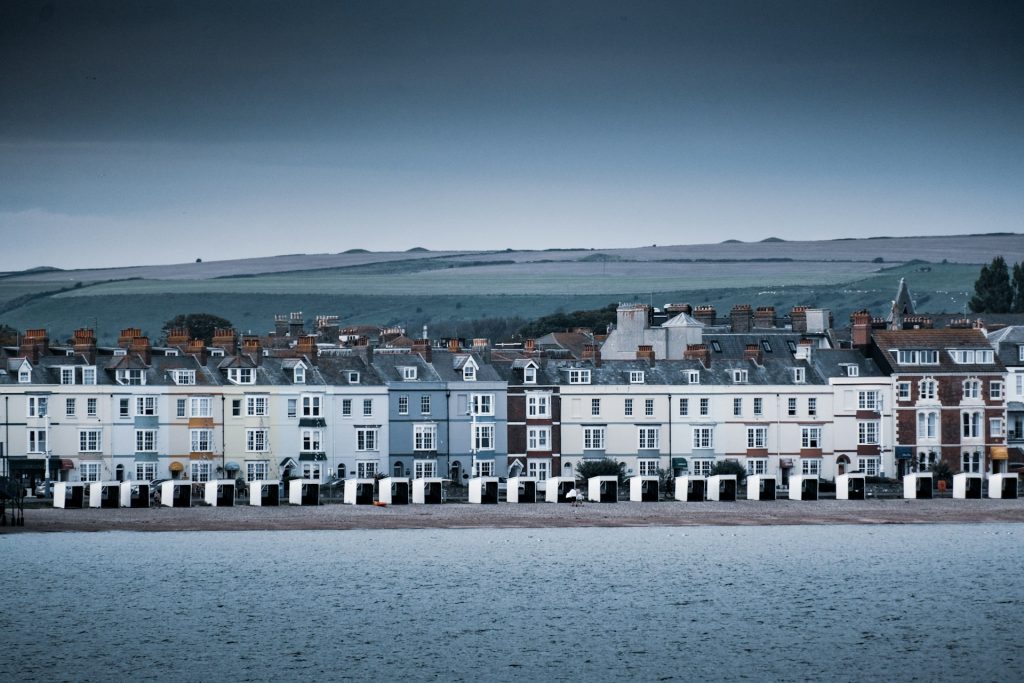
Weymouth is perfect for simple beach days on the Dorset coast and is ideal for last minute coastal breaks. The main beach is sandy, sheltered and close to the town centre. The esplanade has cafés, toilets, shops, amusements and places to eat. It’s a different kind of stop from Charmouth or West Bay because the beach is built for swimming, paddling and family days.
The harbour is worth your time too. You can walk from the beach to the old harbour, then continue to Nothe Gardens and Nothe Fort. The fort was built to defend Portland Harbour and now has military history displays, tunnels, gun decks and views across the water.
The Isle of Portland sits south of Weymouth and feels very different from the town. Portland Bill Lighthouse is the main landmark. Chesil Beach and the Fleet Lagoon run along the western side, creating one of the most distinctive coastal landscapes in Dorset. Portland is also known for quarrying, climbing, birdwatching and rougher coastal walks.
A simple Weymouth walk links the beach, harbour, Nothe Gardens and Nothe Fort. The Rodwell Trail is another easy route, following an old railway line towards Ferrybridge. For a harder coastal walk, the Portland Bill circular route is around 4 miles, with cliff paths and open views. Stay clear of cliff edges and check weather conditions before walking.
Dog rules in Weymouth are quite specific. Dogs are allowed all year from Greenhill Groyne to Overcombe and in the dog exercise area near the Pavilion. The main sandy section between Greenhill Groyne and the Pavilion dog exercise area allows dogs from 1 October to 30 April.
Lulworth Cove and Durdle Door
Lulworth Cove and Durdle Door are the most famous landmarks on Dorset’s Jurassic Coast. They’re close together near West Lulworth, but the walk between them is steep, so shouldn’t be treated as a flat stroll in flip-flops!
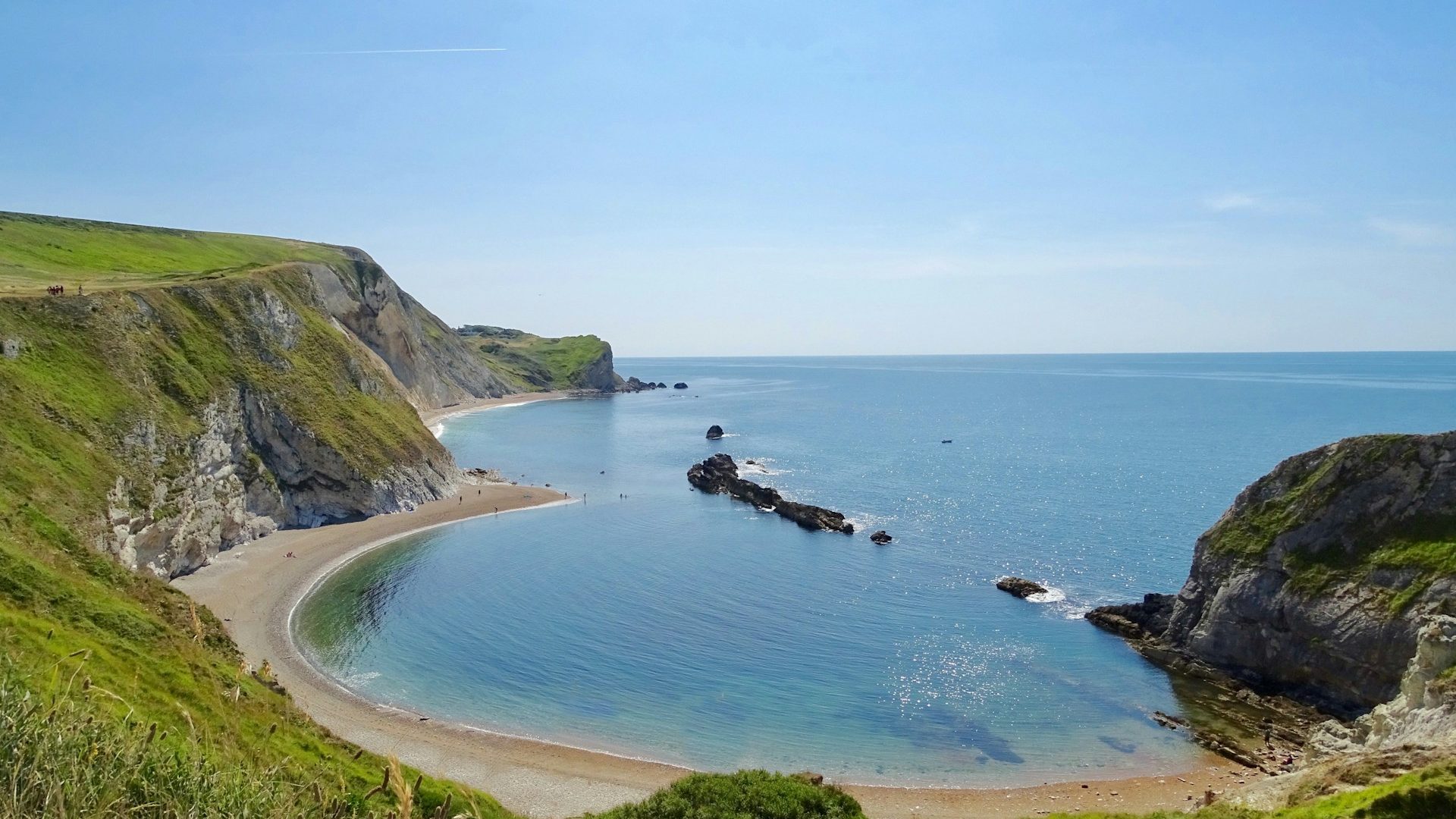
Lulworth Cove is a near-circular bay formed by sea erosion through softer rock behind a harder limestone entrance. The village has cafés, pubs, toilets, parking and the Lulworth Cove Visitor Centre. The beach is shingle, and the cove is better for scenery, short walks and geology than a traditional beach day.
Durdle Door is a natural limestone arch on the Lulworth Estate. The beach below is shingle, with steep access from the clifftop path. Man O’ War Beach sits on the other side of the headland and is another well-known beach in this area.
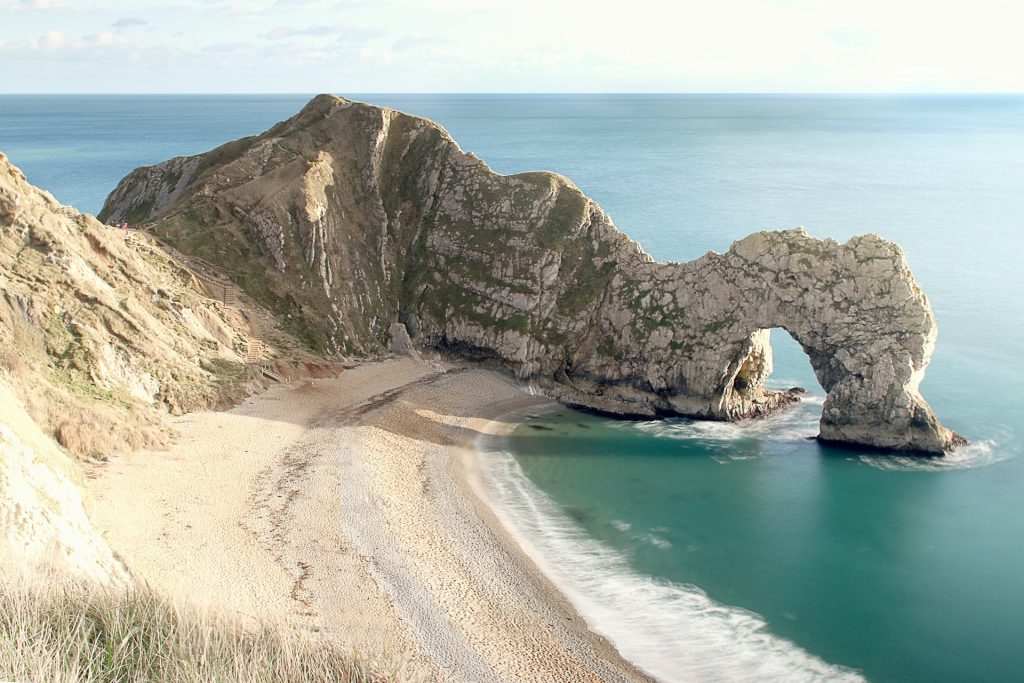
The walk from Lulworth Cove to Durdle Door is about 1.25 miles one way. It’s short, but it has a steep climb out of Lulworth and a steep descent towards Durdle Door. The views are excellent, but the path can be busy in summer. Wear proper shoes and take plenty of water.
Longer walkers can continue towards White Nothe or Ringstead. These routes have more distance, fewer facilities and exposed cliff sections, so they need better planning.
Dogs are allowed all year at Lulworth Cove, Durdle Door and Man O’ War Beach, although you’ll still need to keep dogs under control, especially near cliffs, livestock and busy paths.
Swanage
Swanage is a proper seaside town on the Isle of Purbeck, with a sandy beach, pier, shops, cafés, pubs and a railway station on the heritage Swanage Railway. It’s a good choice if you want a beach holiday with walks and day trips close by.
The main beach is sandy and sheltered, with beach huts and a promenade behind it. It works well for swimming and family beach days in suitable conditions. The pier is another key landmark. It’s used for walking, fishing, boat trips and diving.
The Swanage Railway runs steam and diesel trains between Swanage and Norden, with stops including Corfe Castle. That makes Corfe Castle an easy day out without driving. The castle ruins sit above the village and are managed by the National Trust.
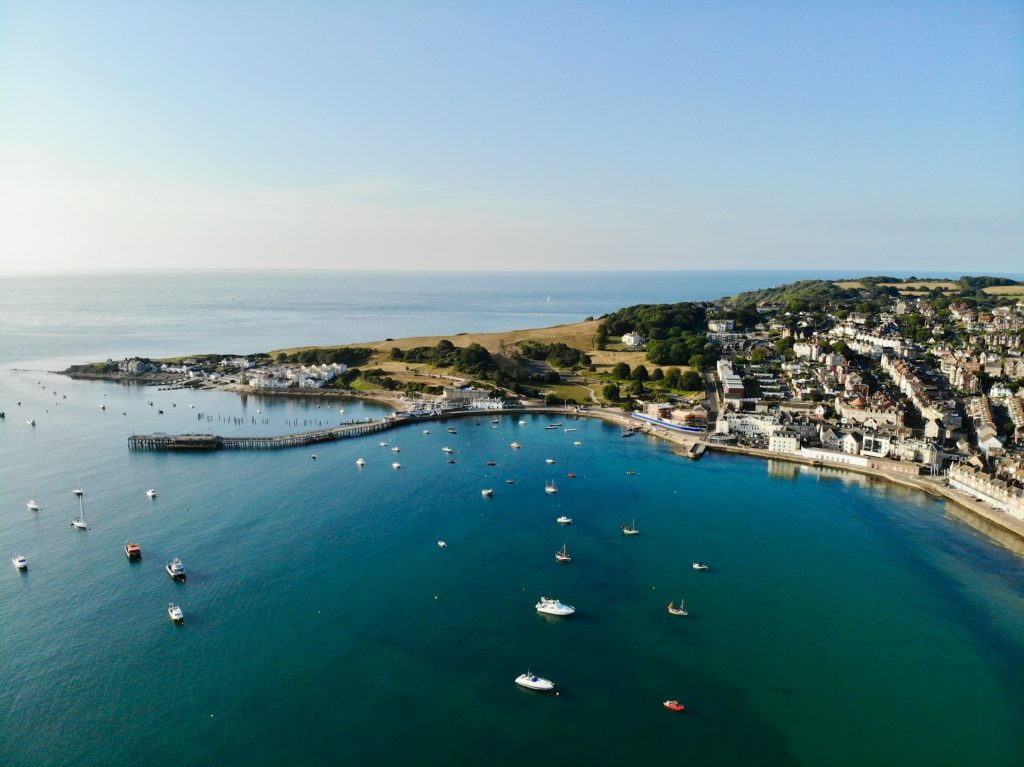
Durlston Country Park is one of the best local places to walk. From Swanage, the walk to Durlston Castle is around 2 miles one way. The route climbs out of town and gives views over the sea. Durlston has a visitor centre, the Great Globe, cliff paths and wildlife watching.
For a longer walk, Swanage to Studland via Ballard Down and Old Harry Rocks is around 6 miles one way. It’s a moderate route with climbs and open chalk paths. It links two of the best coastal areas in Purbeck.
Dogs are allowed on Swanage Beach from 1 October to 30 April. In summer, they’re restricted on the main beach, so check local signs before planning a beach day with your dog.
Studland and Old Harry Rocks
Studland has a different feel from the busier resort beaches. The bay has long sandy beaches, dunes, heathland and views across to Poole Harbour and Old Harry Rocks. The main beach areas are Shell Bay, Knoll Beach, Middle Beach and South Beach.
Knoll Beach has the main facilities, including parking, toilets and food. Middle Beach and South Beach are smaller and sit closer to the Old Harry Rocks end of the bay. Shell Bay is at the northern end, close to the Sandbanks ferry.
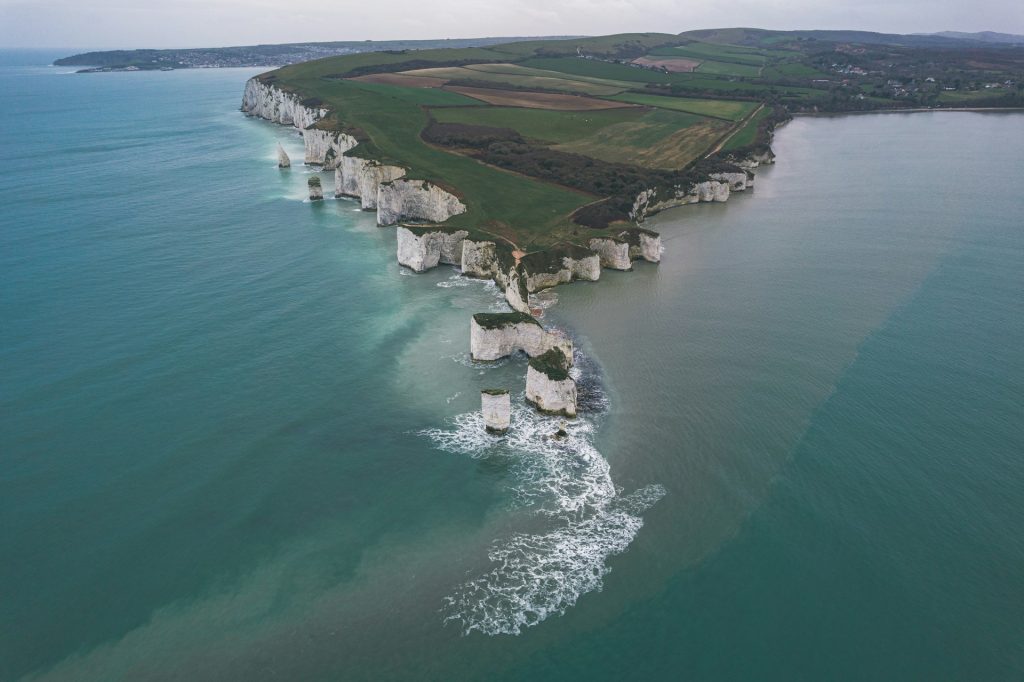
Old Harry Rocks are the main landmark. These chalk stacks mark the eastern end of the Jurassic Coast. The walk from Studland village to Old Harry Rocks is around 3.5 miles return. It’s not a long walk, but the cliffs are high, so keep well back from the edge.
Studland also has heathland habitats managed by the National Trust. The area is important for wildlife, including rare reptiles and birds. Stick to marked paths where requested and don’t disturb fenced-off areas.
For a longer day, you can walk from Studland to Swanage over Ballard Down. The route is around 6 miles one way and has some steady climbs. The views cover Poole Bay, Swanage Bay and the Purbeck coast.
Dog rules are different from many Dorset beaches. Dogs must be on leads on Shell Beach, South Beach, Middle Beach and the southern part of Knoll Beach between 1 May and 30 September. The National Trust also asks owners to keep dogs under control to protect the reserve and other beach users.
Planning a Dorset Jurassic Coast trip
For fossils, start with Lyme Regis and Charmouth. Use the museums and fossil centres, join a guided walk if you’re new to fossil hunting, and stay away from the cliff base.
For big landmarks, plan time for Lulworth Cove, Durdle Door and Old Harry Rocks. These places are popular for a reason, but parking and paths get busy. Early starts help in summer.
For sandy beach days when you just want to spend time by the sea, Weymouth, Swanage and Studland are the main choices. Weymouth has the easiest setup with the beach right next to the town. Swanage gives you a traditional seaside town with good day trips and Studland gives you more space and a more natural setting.
For coastal walks, choose West Bay to Eype, Burton Bradstock to West Bay, Lulworth Cove to Durdle Door, Swanage to Durlston or Studland to Old Harry Rocks. These routes lie on the England Coast Path and vary from short climbs to longer clifftop walks. Check weather, tides and path updates before setting off.
For dog-friendly trips, don’t assume every beach has the same rules, planning your dog friendly holiday is a must. Lyme Regis, Charmouth, West Bay, Weymouth, Swanage and Studland all have different restrictions. Many beaches are more dog-friendly outside the summer season, while some, including Durdle Door, Lulworth Cove, Kimmeridge Bay and parts of Chesil, allow dogs all year.
Dorset’s Jurassic Coast works best when you choose the right base for the type of trip you want. Lyme Regis and Charmouth suit fossils. West Bay and Burton Bradstock suit cliff walks. Weymouth suits easy beach days. Lulworth and Durdle Door suit landmark walks. Swanage and Studland suit beaches, walks and Purbeck day trips. To find your ideal holiday home browse our collection of Dorset places to stay by the sea, many that allow dogs, some with beachfront access.