

Trusted source of coastal cottages for over 10 years

Professionally managed and regularly inspected

Book securely with the property manager
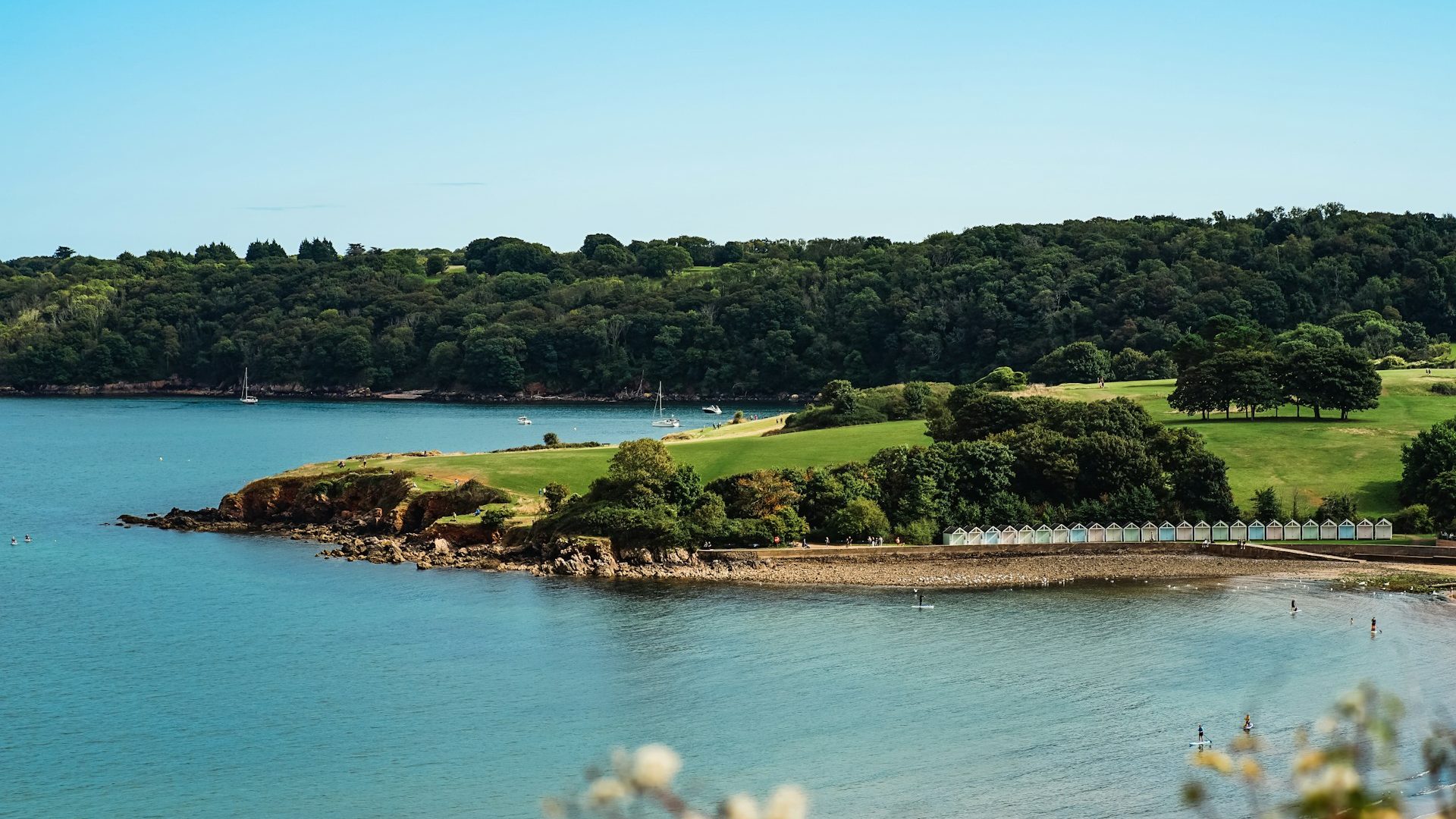
South Devon has a particularly good mix of beaches for families. There are large sandy beaches with lifeguards and plenty of facilities, smaller coves for rock pooling, and beaches where children can try surfing, paddleboarding or kayaking.
The right beach depends on what you want from the day. Paignton and Goodrington have plenty to do close to the sand, while Bantham and Bigbury-on-Sea are better suited to families looking for a large beach and watersports. Wembury is one of the best choices for rock pooling and learning about marine life.
Dog rules also vary considerably. Some beaches ban dogs during the main summer season, while others retain a dog-friendly section throughout the year. Here are some of the best family beaches on the South Devon coast, with the practical details you need before visiting.
1. Goodrington Sands, Paignton
Goodrington Sands is one of the easiest beaches in South Devon for filling a whole day with children. The beach is divided into North and South Sands, with Youngs Park immediately behind it and Paignton’s other attractions nearby.
There are cafés and restaurants, beach showers, toilets, beach hut hire, deckchairs, pedalos and windsurfing equipment. The central toilets are open throughout the year, while additional toilets at the north and south ends operate seasonally. The beach is around 100 metres from the Youngs Park and Quay West car parks in Paignton. Access is also relatively good, with ramps, level areas and seasonal beach matting on South Beach.
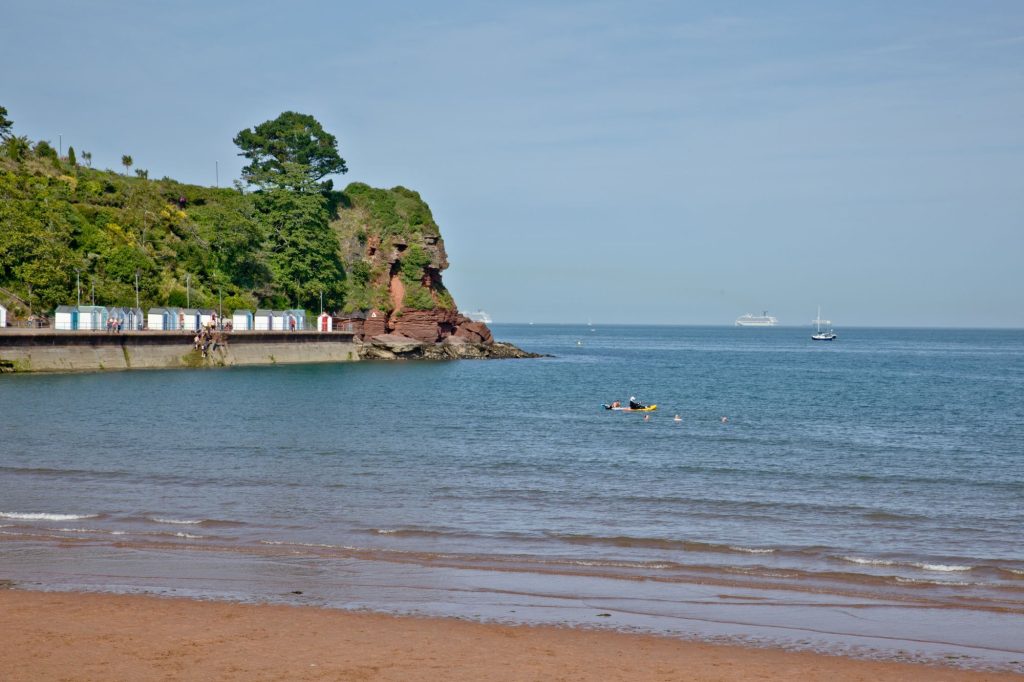
Low tide brings additional sand and rock pools to explore. Another distinctive feature is the railway line running close to the beach, where families can see trains on the Dartmouth Steam Railway passing behind the seafront.
Dogs: North Sands welcomes dogs throughout the year. Dogs are banned from South Sands between 1 May and 30 September, and dogs on the promenade must be kept on leads.
Facilities: Toilets, cafés/restaurants, showers, parking, beach huts, deckchairs and watersports hire.
Family highlight: A good choice when you want beach time combined with other activities close by.
2. Bantham Beach
Bantham is a large sandy beach near Kingsbridge, at the mouth of the River Avon. At low tide there is a substantial area of sand, with shallow pools and rocks to investigate.
It’s particularly popular with families who want to get into the water. Surfing is one of the main attractions, but the beach is also used for swimming, kayaking and paddleboarding. RNLI lifeguards operate during the main season.
There is a large private car park with around 750 spaces approximately 200 metres from the beach. Toilets are at the end of the car park, with a pub, shop and post office in Bantham village. Access from the car park involves crossing soft sand, although the gradient down towards the beach is fairly gentle.
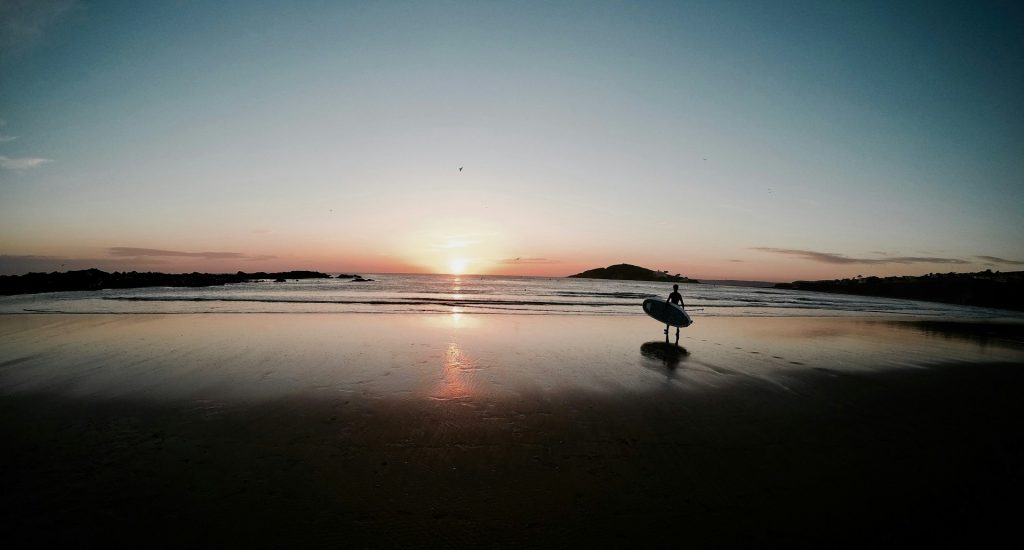
Families should take care around the River Avon estuary, where currents can be much stronger than they appear. Stick to the designated swimming areas and follow lifeguard advice when the beach is patrolled.
Dogs: Dogs are not permitted on the main beach between 1 May and 30 September.
Facilities: Large car park, toilets, seasonal lifeguards, village shop and pub nearby.
Family highlight: One of the best choices for families with older children who want to surf or spend plenty of time in the water.
3. Bigbury-on-Sea
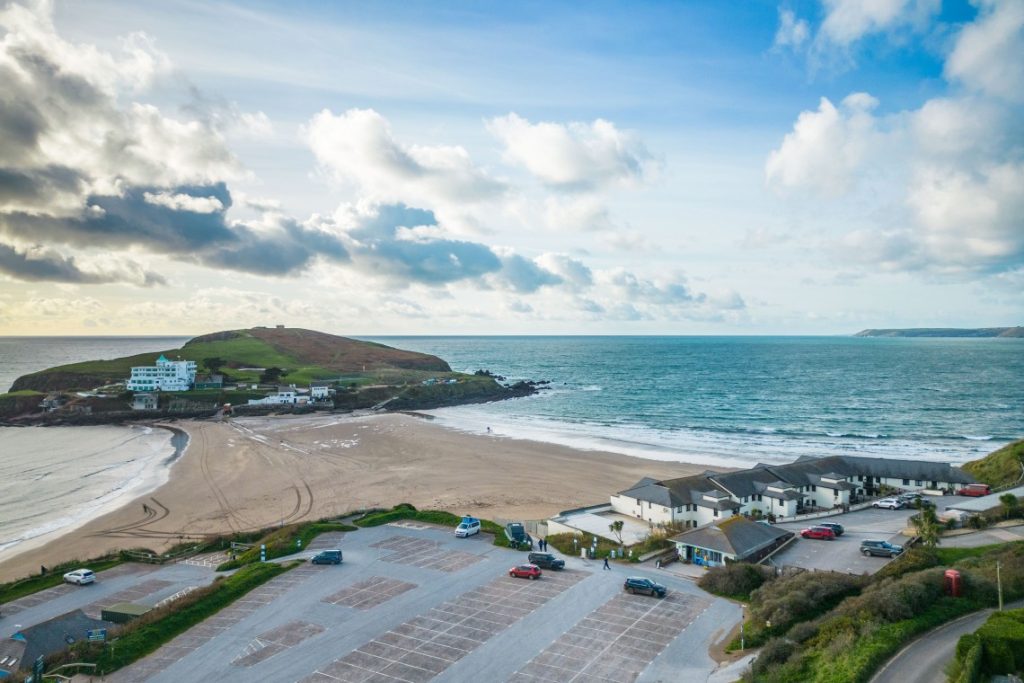
Bigbury-on-Sea combines a large sandy beach with one of South Devon’s most unusual attractions: Burgh Island.
At low tide, a sandy causeway links the beach with the island. Once the tide covers the causeway, visitors can cross aboard the distinctive sea tractor. Because the causeway disappears with the tide, families planning to walk across should check tide times rather than assuming they can return the same way.
The beach has shallow areas for paddling, rock pools and plenty of sand at low tide. Surfing and other watersports are also popular. A large pay-and-display car park is immediately beside the beach, with toilets, a beach shop and Venus Café close at hand.
Sedgewell Cove at the eastern end is another area worth exploring. It has shallow water and extensive rock pools and joins the Avon Estuary beach when the tide is out. Families should avoid attempting to cross the river mouth because of strong currents and soft sand.
Dogs: Dogs are generally permitted throughout the year on the beach west of the Burgh Island causeway. They are banned from the main beach east of the causeway towards Sedgewell Cove between 1 May and 30 September. For more details check our Devon dog-friendly beach guide.
Facilities: Large car park, toilets, café, beach shop and seasonal additional facilities.
Family highlight: Crossing to Burgh Island at low tide and returning on the sea tractor when the tide is in.
4. Blackpool Sands, near Dartmouth
Despite its name, Blackpool Sands near Dartmouth isn’t a sandy beach. It is made up of fine shingle, which makes it quite different from Bantham, Bigbury and the sandy beaches around Torbay.
It’s also exceptionally well equipped for families. The large car park has around 800 spaces and is only about 25 metres from the beach. Facilities include toilets, showers, baby changing, a beach shop, café, watersports equipment hire and deckchair hire. There is wheelchair access onto the beach by ramp.
Kayaks and paddleboards can be launched directly from the shore, while swimming is popular when conditions are suitable. RNLI lifeguards normally operate during the peak summer period.
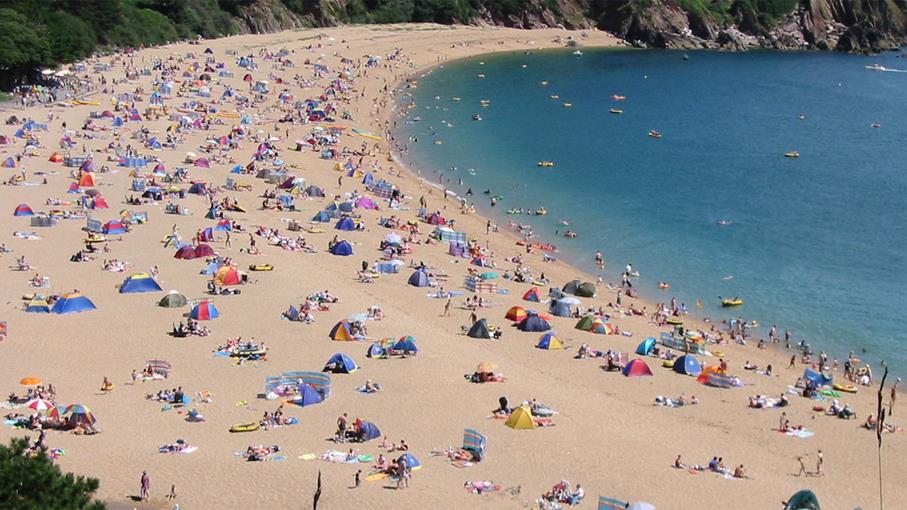
One advantage of the shingle is that the water becomes deep relatively close to shore, so adults need to supervise younger children carefully. Check the beach flags and conditions before swimming.
Dogs: Dogs are not permitted on the beach, café or car parks from 1 May to 30 September.
Facilities: Large car park, toilets, showers, baby changing, café, beach shop, watersports hire, deckchairs and seasonal lifeguards.
Family highlight: Excellent facilities and easy access make this a practical choice when travelling with younger children and lots of beach equipment.
5. Wembury Beach
Wembury is one of South Devon’s best family beaches if the main attraction isn’t simply building sandcastles.
The rocky shoreline is particularly good for rock pooling. The National Trust recommends arriving shortly before low tide, when families can look for anemones, limpets, crabs, starfish and other marine life. Wembury Marine Centre also runs family events including guided rock pooling, snorkelling and beach activities.
The beach itself is a mixture of sand, pebbles and rocky areas. There is a National Trust car park, toilets, an outdoor shower and the Old Mill Café. The café sells some beach essentials, while baby-changing facilities are available at the Marine Centre when it is open.
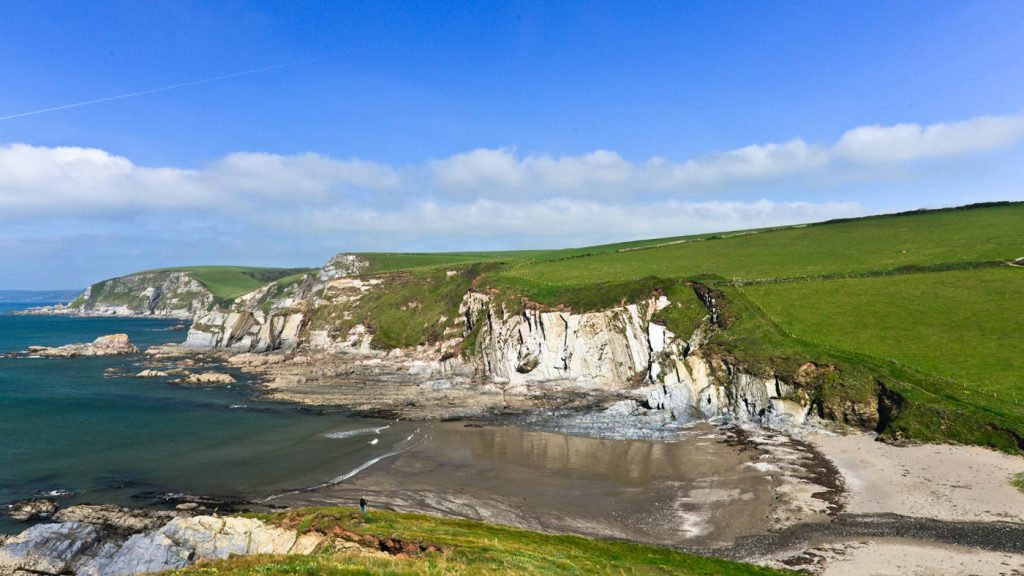
There is no lifeguard at Wembury, so families need to take particular care around the water and rocks. Checking the tide is also important if rock pooling is the main reason for visiting.
Dogs: Dogs are allowed on Wembury Beach from 1 October to 30 April but not between 1 May and 30 September. Dogs can use surrounding countryside walks throughout the year, subject to livestock restrictions.
Facilities: National Trust parking, toilets, café, outdoor shower and Marine Centre.
Family highlight: Rock pooling and the chance to learn about the marine life found around Wembury Bay.
6. South Milton Sands and Thurlestone Sands
South Milton Sands is a long stretch of coarse sand and fine shingle near Thurlestone. Its best-known landmark is Thurlestone Rock, the large natural stone arch just offshore.
This is a popular choice for families who want a less developed beach without giving up essential facilities. The National Trust car park has around 200 spaces and is approximately 50 metres from the beach. There are public toilets, a seasonal food servery and seasonal watersports hire.
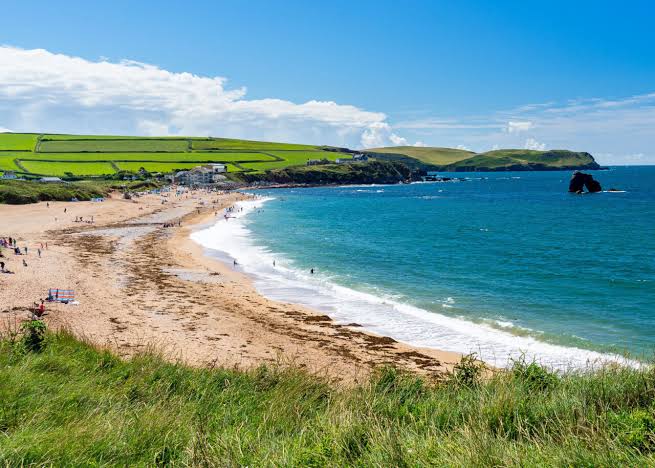
Swimming is possible when conditions are calm, and the beach is also used for watersports and coastal walking. RNLI lifeguards operate during part of the summer season. Access from the National Trust car park includes a few steps and a wooden ramp, with gravel slipways providing alternative routes onto the beach.
Dogs: There are no seasonal dog restrictions for South Milton Sands or Thurlestone Sands, both are year-round dog-friendly beaches.
Facilities: National Trust parking, toilets, seasonal refreshments, seasonal watersports hire and summer lifeguards.
Family highlight: A particularly useful choice for families bringing a dog during the summer holidays.
7. Dawlish Warren Beach
Dawlish Warren is well suited to families who want plenty of facilities within a short distance of the beach.
The sandy beach is backed by a resort area with cafés, amusements and other facilities. There are toilets, showers, deckchair hire, a first-aid room, parking and seasonal lifeguards. Dawlish Warren railway station is also within walking distance, making this one of the easier South Devon beaches to visit without a car.
Immediately beside the resort is Dawlish Warren National Nature Reserve, part of the internationally important Exe Estuary. It provides a very different activity from the beach, with walking routes and opportunities to see birds and other wildlife. Push-chairs and wheelchairs can use the promenade route as far as the visitor centre, although soft sand makes access more difficult beyond this point.
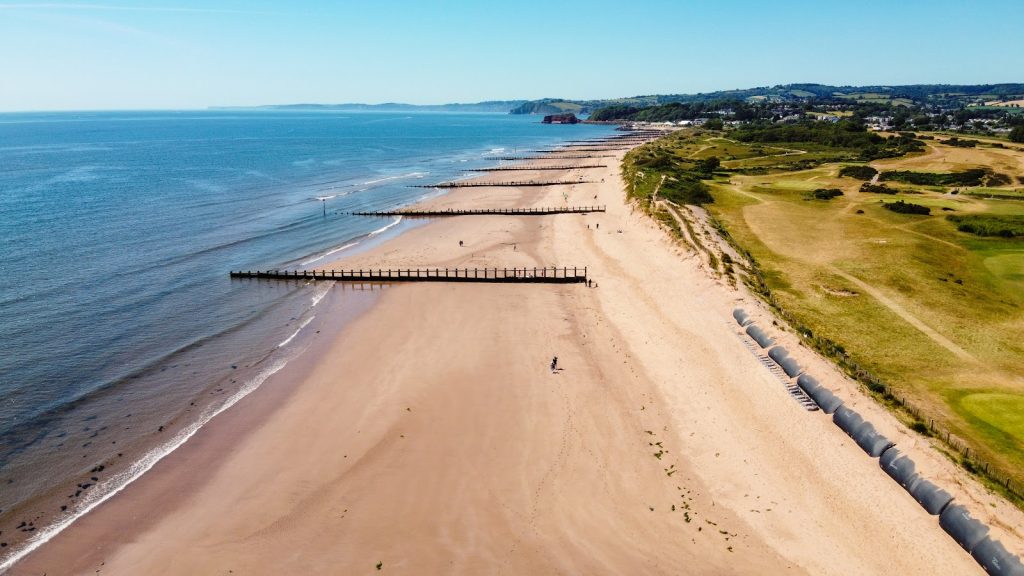
Dog access is more complicated here than at most beaches, so check the signs carefully.
Dogs: Restrictions apply to different sections. Dogs are permitted throughout the year on part of the tidal beach and between designated groynes, while other sections have seasonal or permanent exclusions. Dogs must also be kept on leads in the nature reserve.
Facilities: Parking, railway station nearby, toilets, showers, cafés/restaurants, amusements, deckchairs, first aid and seasonal lifeguards.
Family highlight: Beach, traditional seaside activities and a nature reserve can all be combined in the same day.
8. Broadsands Beach, Paignton
Broadsands is a good alternative to the busier central beaches at Paignton and is perfect for beach lovers. The beach is in a broad bay between Paignton and Brixham, with a large green immediately behind it.
Facilities are particularly good. There are year-round toilets, including accessible facilities, plus a café/restaurant, showers, deckchair hire, beach huts, boat hire and a designated windsurfing area. The car park is directly behind the beach.
The long promenade is level, although getting from it onto the beach itself involves steps or the slipway. For 2026, Broadsands has an Excellent classification under the English Riviera Beach Standard.
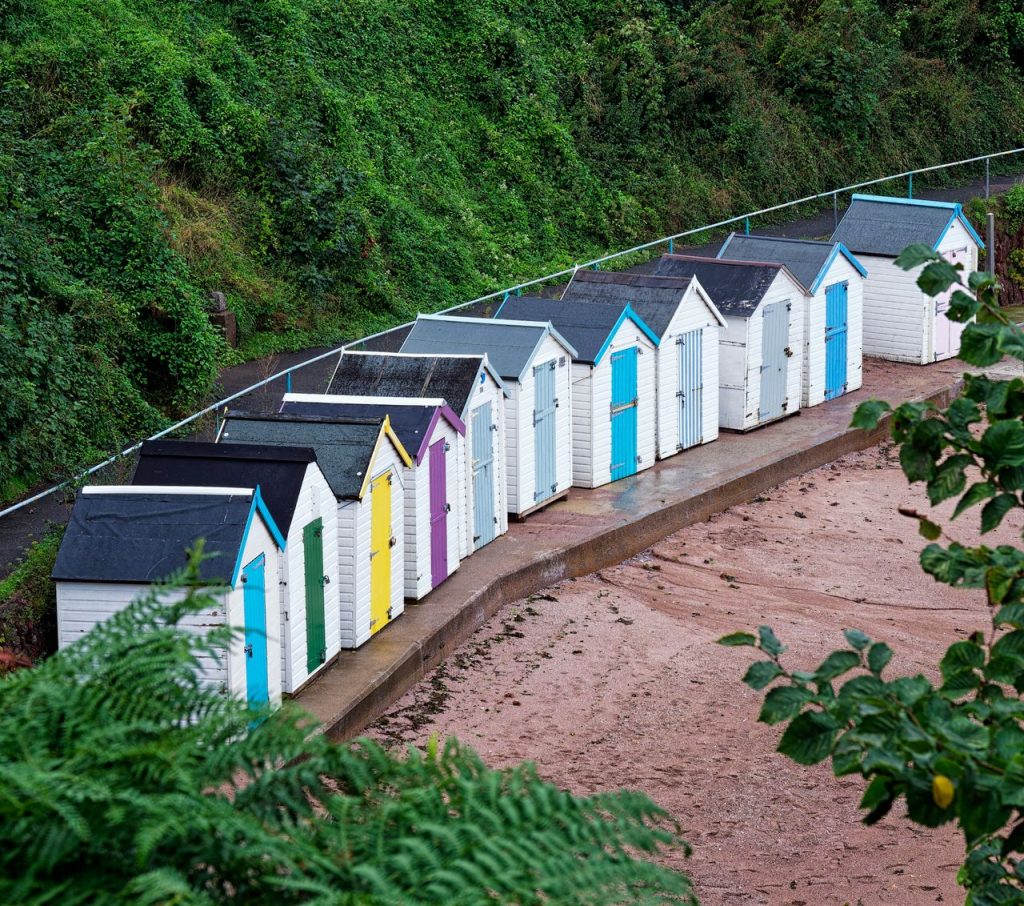
The large grass area behind the beach is handy for families who want somewhere away from the sand for games or a picnic.
Dogs: Dogs are banned from the beach between 1 May and 30 September. There is a dog exercise area on the green behind the beach, where dogs must be kept on leads.
Facilities: Car park, year-round toilets, accessible toilets, café/restaurant, showers, beach huts, deckchairs and boat hire.
Family highlight: Plenty of facilities without being in the centre of a large seaside resort.
9. Paignton Sands
Paignton Sands is one of the better choices for families who want a traditional seaside day rather than a quiet beach.
The long red-sand beach runs either side of Paignton Pier. Immediately behind it are the promenade and Paignton Green, where you’ll find a play park and crazy golf. The beach itself offers pedalo hire and deckchairs, while cafés and restaurants are close by.
There are three sets of public toilets around the seafront, including accessible facilities, and level access along the promenade and harbour. Ramps on either side of the pier provide easier access from the promenade onto the sand.
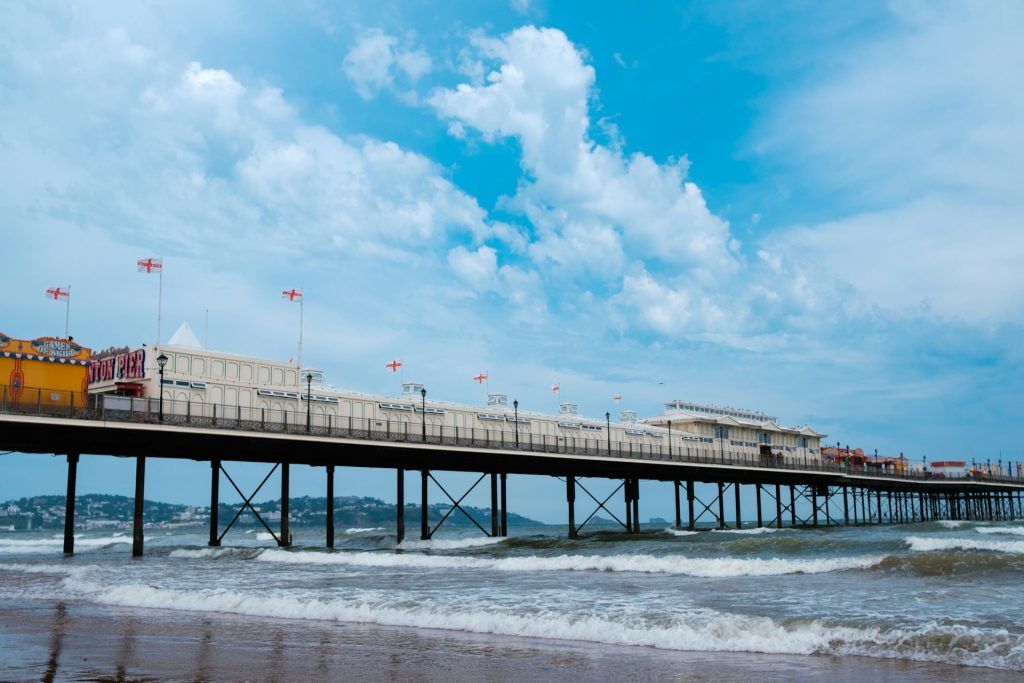
The main disadvantage is parking. The nearest council car park is Victoria, rather than immediately behind the beach, so families carrying pushchairs, inflatables and beach equipment should allow for a short walk.
Dogs: Dogs are not allowed on Paignton Sands between 1 May and 30 September. There is a dog exercise area on the green behind the beach.
Facilities: Toilets, cafés/restaurants, pier, promenade, deckchairs, pedalos, play park and crazy golf.
Family highlight: Best for children who want more than just the beach, with the pier and other seafront entertainment close at hand.
10. Hope Cove
Hope Cove is made up of two beaches, with Mouthwell Sands at Inner Hope and the larger beach at Outer Hope. For families, the appeal is the combination of a sandy cove and a small village where refreshments are close by.
Mouthwell Sands has a slipway down from the road, with an alternative stepped entrance. There is a small car park approximately 100 metres away, while Outer Hope has a beach shop, café and pub. Public toilets are located near Watchhouse Sands.
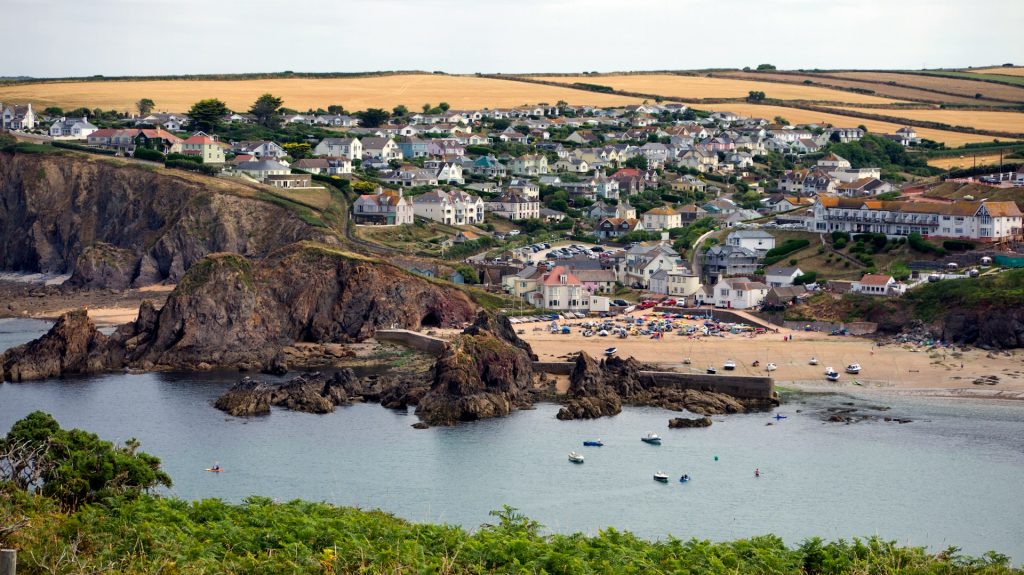
The beach is also directly on the South West Coast Path, with walking routes with sea views towards Thurlestone in one direction and Bolberry Down in the other. This makes Hope Cove particularly suitable for families with older children who want to combine a few hours on the beach with a short coastal walk.
Dogs: Dogs are not permitted on Mouthwell Sands between 1 May and 30 September. Restrictions can differ between the beaches around Hope Cove, so check the signs for the particular section you plan to use.
Facilities: Small car park, toilets nearby, beach shop, café and pub.
Family highlight: A smaller sandy beach with food and facilities available in the village rather than a large resort.
Which South Devon Beach is Best for Your Family?
For facilities and plenty to do, Goodrington Sands and Paignton Sands are hard to beat. Both have food, toilets and activities close to the beach. If you want to plan more than beach days, our guide to coastal activities in Devon includes paddleboarding, wildlife boat trips, rock pooling and other ways to explore the coast.
For surfing and watersports, Bantham and Bigbury-on-Sea are better choices. Bigbury also has the added attraction of Burgh Island and its sea tractor.
Families with younger children who want easy parking and facilities close to the beach should consider Blackpool Sands or Broadsands, although Blackpool Sands is shingle rather than sand.
For rock pooling, Wembury stands out because of its rocky shoreline and Marine Centre. South Milton Sands is one of the better choices for a summer beach day with a dog, as there are no known seasonal restrictions.
Whichever beach you choose, check tide times, lifeguard dates and current dog restrictions before travelling. Beach rules can change, and some South Devon beaches have different restrictions on neighbouring sections of the same beach.
And when it’s time to choose where to stay, our guide to the best places for sea views in South Devon covers coastal towns and villages from Bigbury-on-Sea and Salcombe to Dartmouth and Torquay.