


Trusted source of coastal cottages for over 10 years

Professionally managed and regularly inspected

Book securely with the property manager
North Devon has some of the best-known beaches in the South West, but the towns and villages along this coast are very different from one another. Woolacombe, Croyde and Saunton are some of the best surf beaches in Devon with long sandy beaches while Ilfracombe and Combe Martin sit on a more rugged stretch of coast, with harbours, coves, cliffs and access to Exmoor.
Further west, Instow, Appledore and Westward Ho! look towards the Taw and Torridge estuary, with wide beaches, village streets, nature reserves and family-friendly walks.
The right place to stay depends on the type of trip you want. Some places are better for beach days and surf lessons. Others suit walkers, food trips, harbour visits or quieter breaks by the water. Here is a guide to the main North Devon coastal areas to consider.
Woolacombe
Woolacombe is one of the main beach resorts on the North Devon coast. The beach runs for about three miles between Morte Point and Baggy Point, with a wide stretch of sand at low tide. It’s popular with families, surfers, bodyboarders and walkers.
The main beach is the reason most people stay here. It has plenty of space, lifeguard cover in the main season, surf schools, beach shops, cafés and easy access from the village. The sand is firm enough for long walks, and the beach links naturally with Putsborough at the southern end.
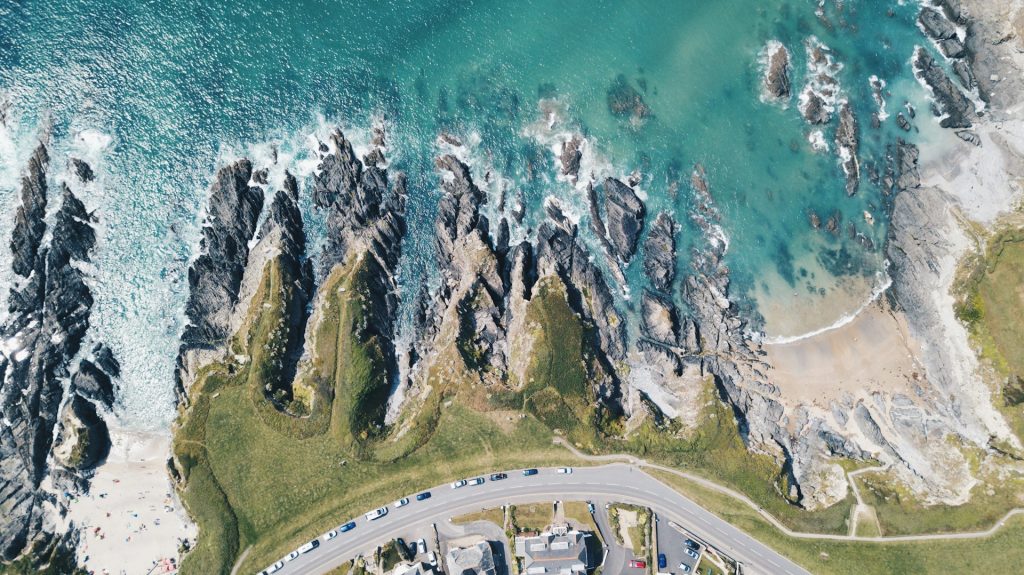
Woolacombe village has pubs, restaurants, takeaways, shops and accommodation close to the beach. It’s busier in school holidays, but the length of the beach helps people spread out. Barricane Beach, just north of the main beach, is a smaller cove known for rock pools and shells. Combesgate Beach is another smaller option nearby, with rock pools at low tide.
For walks, Morte Point is the main local landmark. The route from Woolacombe to Morte Point and back gives sea views, rocky headlands and a chance of seeing seals below the cliffs. Baggy Point, at the other end of the bay near Croyde, is one of the best walks with sea views in Devon offering views back across Woolacombe Sands.
Woolacombe works well if you want a beach holiday with facilities close by. It is also a practical choice if different people in your group want different days: surfing, swimming, walking, beach time or short trips to Ilfracombe and Croyde.
Croyde
Croyde is one of the best-known surf villages in Devon. It sits behind Croyde Bay, between Baggy Point and Saunton Down, with a sandy beach, dunes, surf schools, pubs, cafés and campsites nearby.
The beach is smaller than Woolacombe or Saunton, but it has a strong reputation for surfing which is one of the best coastal activities in Devon. Waves can be powerful, and beginners should use surf schools rather than heading in without advice. The beach has lifeguard cover in the main season, and conditions can change quickly in terms of the tide and swell.
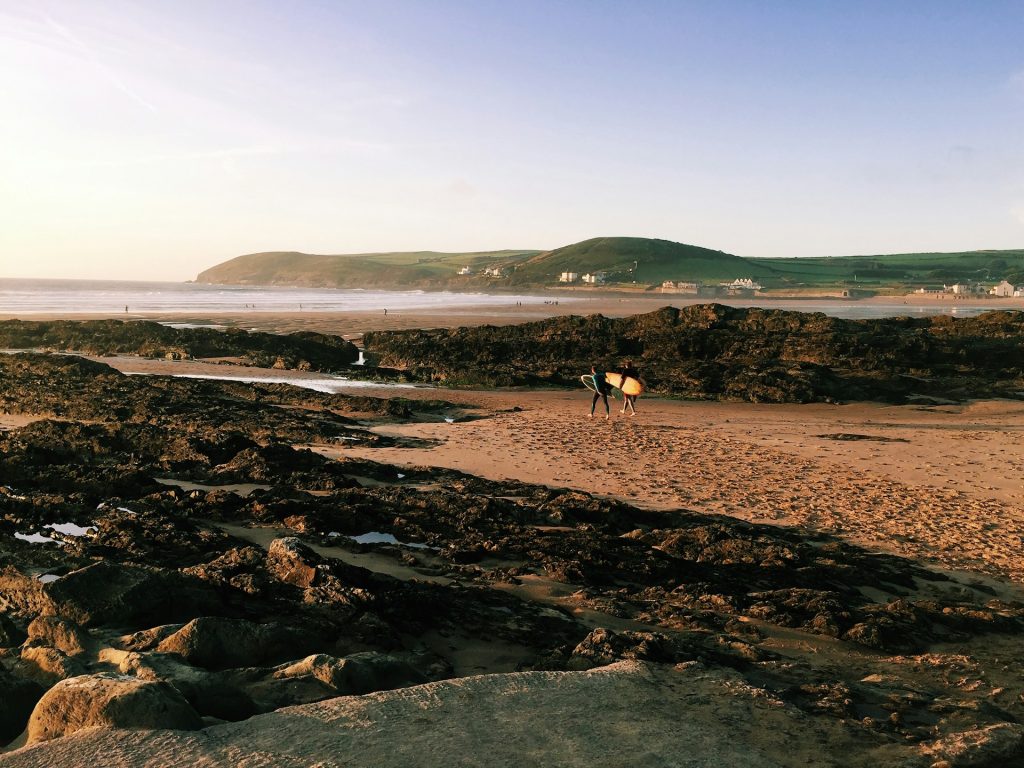
The village itself has old cottages, narrow lanes, pubs and places to eat. It feels more compact than Woolacombe, and many visitors come for surfing, walking and a village atmosphere rather than a large resort seafront. The Thatch and Billy Budds are well-known local pubs, while the area around the beach offers surf hire and a host of facilities.
Baggy Point is the main walk from Croyde. The National Trust route from the village or car park gives views over Croyde Bay, Woolacombe Sands and Bideford Bay. It’s a good short walk, but the cliffs are exposed, so be sure to stay on marked paths.
Croyde is also close to Saunton Sands and Putsborough, so you have several major beaches within a short drive. It suits surfers, families with older children, couples and groups who want a lively village near the beach.
Saunton
Saunton is best known for Saunton Sands, a huge beach backed by dunes. The beach runs for around three miles, with wide sand at low tide and is good for surfing. It’s more open than Croyde and has a less village-like feel, but it gives you space, views and direct access to one of North Devon’s most important coastal landscapes and is also popular for beach walks in winter.
The beach is popular with long-boarders because the waves can be more forgiving than Croyde. It’s also used by families, walkers and dog owners. The size of the beach means there is plenty of room to spread out, although the walk from the car park to the water can be long at low tide.
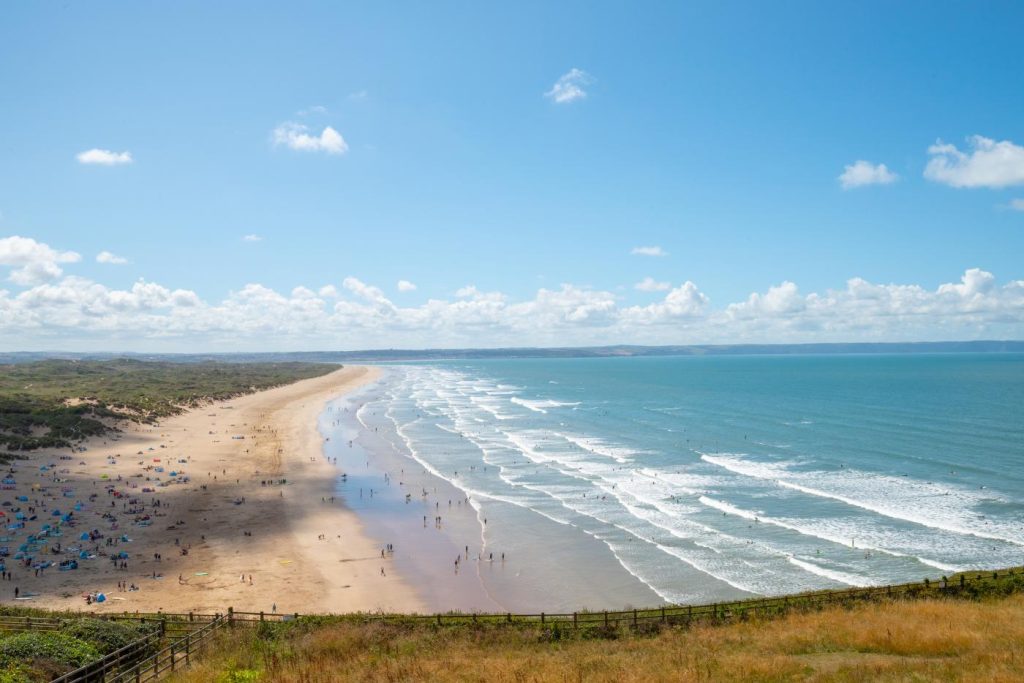
Behind the beach are Braunton Burrows, one of the largest sand dune systems in the UK. The dunes are part of the North Devon UNESCO Biosphere Reserve and are important for wildlife, plants and military history. They are also easy to get lost in, so it’s worth following clear paths and taking care if walking inland from the beach.
Saunton is close to Braunton, where you will find shops, food, surf outlets and the Museum of British Surfing. Croyde, Woolacombe, Appledore and Barnstaple are all within reach for day trips.
Saunton works best if the beach is the main reason for your stay. It is a good choice for surfing, dog walks, long beach days and access to the dunes.
Ilfracombe
Ilfracombe is a harbour town with a very different feel from the surf beaches around Woolacombe and Croyde. It has cliffs, coves, a working harbour, boat trips, Victorian buildings and several local landmarks. It also gives easy access to the North Devon coast between Lee Bay, Watermouth and Combe Martin.
The harbour is the centre of the town. From here, you can take boat trips along the coast or to Lundy Island in season. Damien Hirst’s Verity statue stands at the harbour entrance and is now one of Ilfracombe’s most recognisable landmarks. St Nicholas Chapel, above the harbour, is another important local feature and has a long history with seafarers.
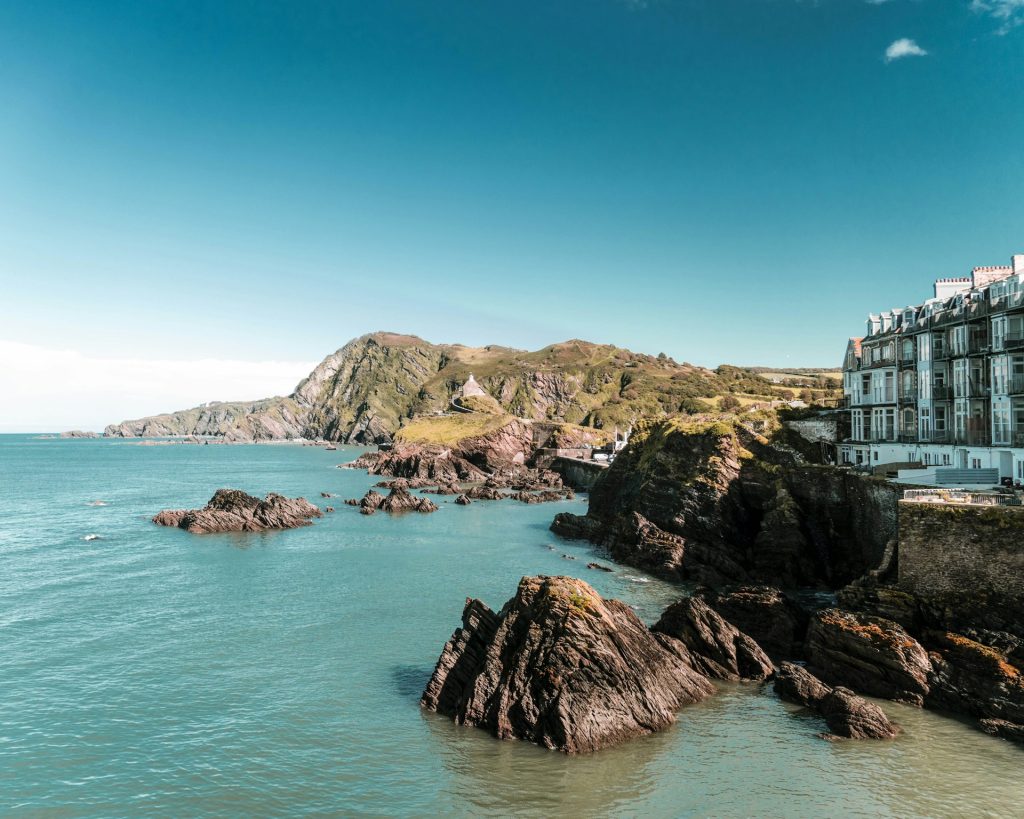
Ilfracombe does not have one large sandy town beach. Instead, it has smaller coves and bathing areas. Tunnels Beaches is the best-known, reached through hand-carved tunnels built in the 1820s. It has tidal bathing pools, a private beach area and a long history as a Victorian sea-bathing spot. Wildersmouth Beach is close to the town centre, while Hele Bay is just to the east.
The town also has the Landmark Theatre, Ilfracombe Museum, shops, cafés, pubs and restaurants. For walks, the South West Coast Path runs through the area, with coastal walking routes towards Lee Bay, Mortehoe, Watermouth and Combe Martin.
Ilfracombe suits visitors who want harbour life, boat trips, coastal walks and places to eat, rather than just a sandy beach holiday. It also works well for mixed-weather stays because there is more to do away from the beach.
Combe Martin
Combe Martin sits in a narrow valley on the edge of Exmoor National Park. It has a sheltered bay, a small beach, rock pools, pubs, cafés, shops and coastal walks nearby. It’s not as busy as Ilfracombe and has more of a small village feel to it.
The beach is a mix of sand and shingle, with rock pools at low tide. It’s popular with families, swimmers and kayakers when conditions are suitable. The beach is not large, so tide times matter. At high tide there is much less space.
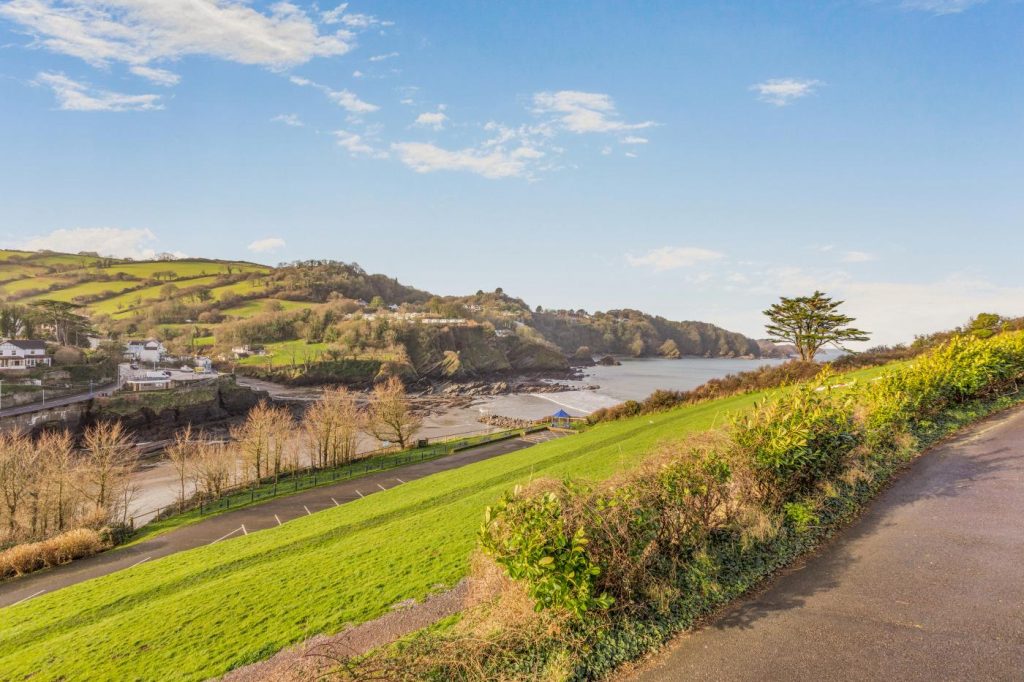
Combe Martin is also known for its dramatic setting. The coast around the village includes high cliffs, small coves and access to some of the steepest sections of the South West Coast Path. The Great Hangman, east of the village, is one of the key local landmarks and is often described as the highest sea cliff in England.
The village has a long local history, including silver mining and lime burning. The Combe Martin Museum covers local life, mining, maritime history and the village’s past. The Pack o’ Cards, a 17th-century building said to have been built to resemble a pack of cards, is another distinctive local landmark.
Nearby places to visit include Watermouth Castle, Ilfracombe, Heddon Valley, Lynmouth and Exmoor. Combe Martin is a good choice if you want a smaller coastal village with beach access, rock pools and interesting walking routes nearby.
Instow
Instow sits on the Taw and Torridge estuary, opposite Appledore. It has a wide sandy beach, calm estuary views, pubs, restaurants, a yacht club and a quieter feel than the surf beaches further north.
The beach is sheltered and has views across the water to Appledore. It’s popular with families, dog walkers and people who want a relaxed beach day. Swimming is not usually the main draw here because of estuary conditions, but the beach is good for walking, sitting by the water and watching the passing boats.
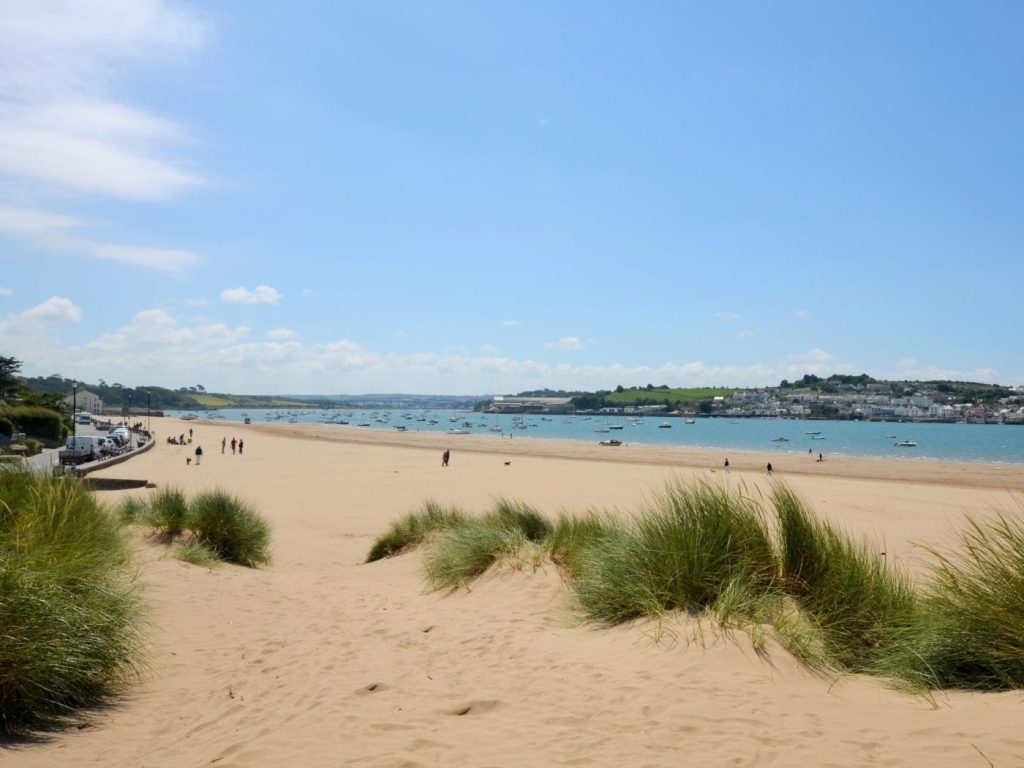
Instow is also well known for its food scene. There are several places to eat close to the seafront, including pubs and restaurants with estuary views. The village has a relaxed feel, and much of the appeal comes from being able to walk along the waterfront rather than plan a packed day.
The Tarka Trail passes through Instow. This traffic-free walking and cycling route links Barnstaple, Bideford, Instow and beyond, following old railway lines in places. It is one of the easiest ways to explore this part of North Devon without steep climbs.
In summer, a passenger ferry usually links Instow with Appledore, depending on tide and weather. That makes it easy to visit both villages without driving. Bideford is also close by, with riverside walks, shops and boat trips.
Instow is a good option for couples, families and dog owners as Instow Beach is one of the best dog friendly beaches in Devon. The town suits holiday-makers who want estuary views, places to eat and flat walks rather than guaranteed surf.
Westward Ho!
Westward Ho! is one of the most unusual place names in Britain, and it is the only UK town with an exclamation mark in its official name. The village developed as a Victorian seaside resort after the success of Charles Kingsley’s novel Westward Ho!.
The beach is the main attraction. It runs for about two miles and has a mix of sand and pebble ridge. At low tide, there is a wide sandy beach with space for walking, surfing, beach games and long days by the water. The beach has Blue Flag status and is popular with families and beginner surfers.
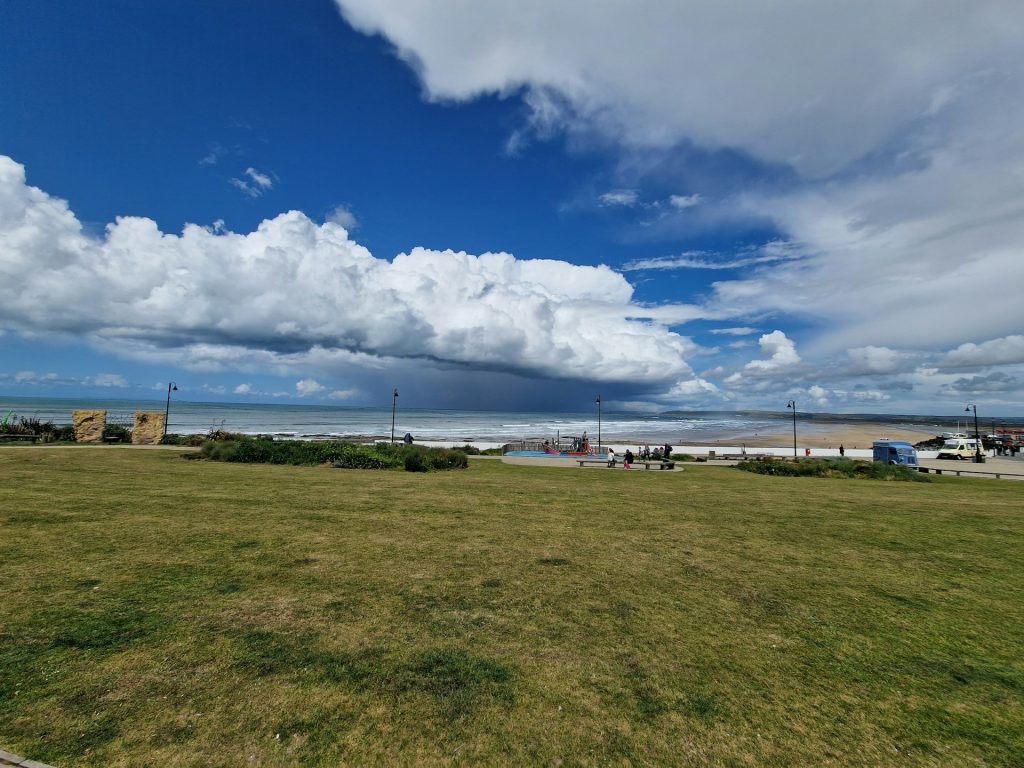
The pebble ridge is an important local feature. It protects Northam Burrows behind the beach and should not be treated as just a pile of stones to climb over or remove from. Northam Burrows Country Park sits behind the ridge and includes grassland, dunes, salt marsh and grazing animals. It is also part of the wider North Devon coastal landscape.
Westward Ho! has cafés, pubs, shops, amusements, surf schools and seafront facilities. It’s more open with a bigger focus on the beach than Appledore or Instow, with stronger surf and more of a resort feel.
The South West Coast Path links Westward Ho! with Appledore, Bideford and the wider estuary area. The walk towards Kipling Tors gives views over the beach and Bideford Bay. Westward Ho! suits families, surfers, walkers and anyone who wants a large beach with facilities nearby.
Appledore
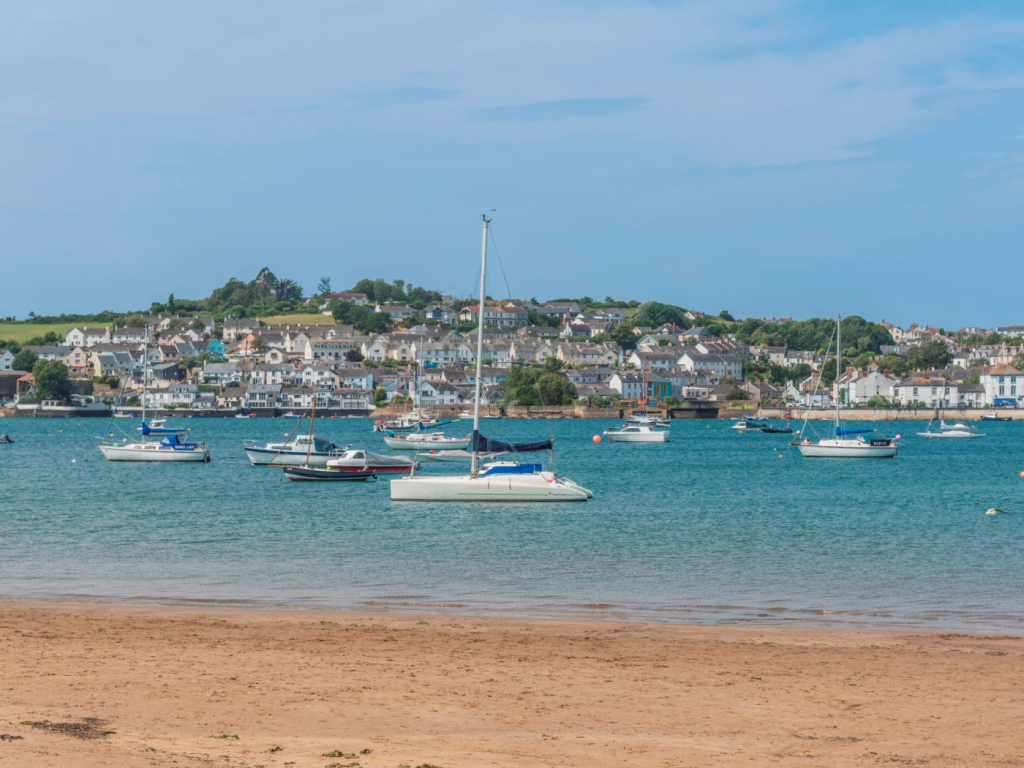
Appledore is a small fishing village at the meeting point of the Taw and Torridge estuaries. It has narrow streets, colourful cottages, a quay, galleries, pubs and strong maritime history. It doesn’t have the big beach feel of Westward Ho! or Woolacombe, but it has plenty of character.
The waterfront is the centre of the village. You can look across to Instow, watch boats on the estuary and walk along the quay. At low tide, there are small sandy and muddy foreshore areas, but Appledore is better for harbour walks and estuary views than full beach days.
Appledore has a long shipbuilding and fishing history. The North Devon Maritime Museum is one of the main local attractions and covers shipbuilding, seafaring, fishing and the area’s links with the sea. The village is also known for the Appledore Book Festival, which brings writers and visitors to the area each year.
In summer, the Appledore to Instow ferry usually runs across the estuary, subject to tide and weather. This gives you easy access to Instow Beach and its seafront pubs without driving around through Bideford.
Westward Ho!, Northam Burrows and Bideford are all close by. Appledore works well if you want a small village stay with food, galleries, estuary walks and easy trips to bigger beaches nearby.
Which North Devon location should you choose?
Woolacombe is the obvious choice for a classic beach holiday, with a long sandy beach, surf schools, shops and plenty of places to eat. Croyde is better if surfing is the main reason for the trip. Saunton gives you more space, longboard-friendly waves and direct access to Braunton Burrows.
Ilfracombe is the better choice for harbour life, boat trips, Tunnels Beaches and coastal walks. Combe Martin suits visitors who want a smaller village, rock pools, kayaking and access to Exmoor.
Instow and Appledore are better for estuary views, food, flat walks and a slower pace while Westward Ho! is the main choice for a large beach on this side of North Devon, with surf, family facilities and Northam Burrows close by.
Whether you’re a couple, family or a large group you’ll find a top selection of seaside cottages in Devon listed with us, many that allow pets with some enjoying sea views and direct beach access.