

Trusted source of coastal cottages for over 10 years

Professionally managed and regularly inspected

Book securely with the property manager
Scotland has some excellent coastal walking routes, from short paths between fishing villages to longer walks across open countryside and remote beaches. There are routes along the Fife Coastal Path, around the Moray Firth, through the Highlands and across several Scottish islands.
Many of these walks pass sandy beaches, historic castles, harbours and nature reserves. Some are suitable for a short afternoon walk, while others require several hours and a reasonable level of fitness.
We’ve selected eight Scottish coastal walks worth exploring, with information about the routes, distances and places to visit along the way. For more ideas about places to explore, our guide to Scotland’s top coastal destinations covers seaside towns, islands and beaches around the country.
1. Elie to St Monans, Fife Coastal Path
Distance: Approximately 3 miles (5km)
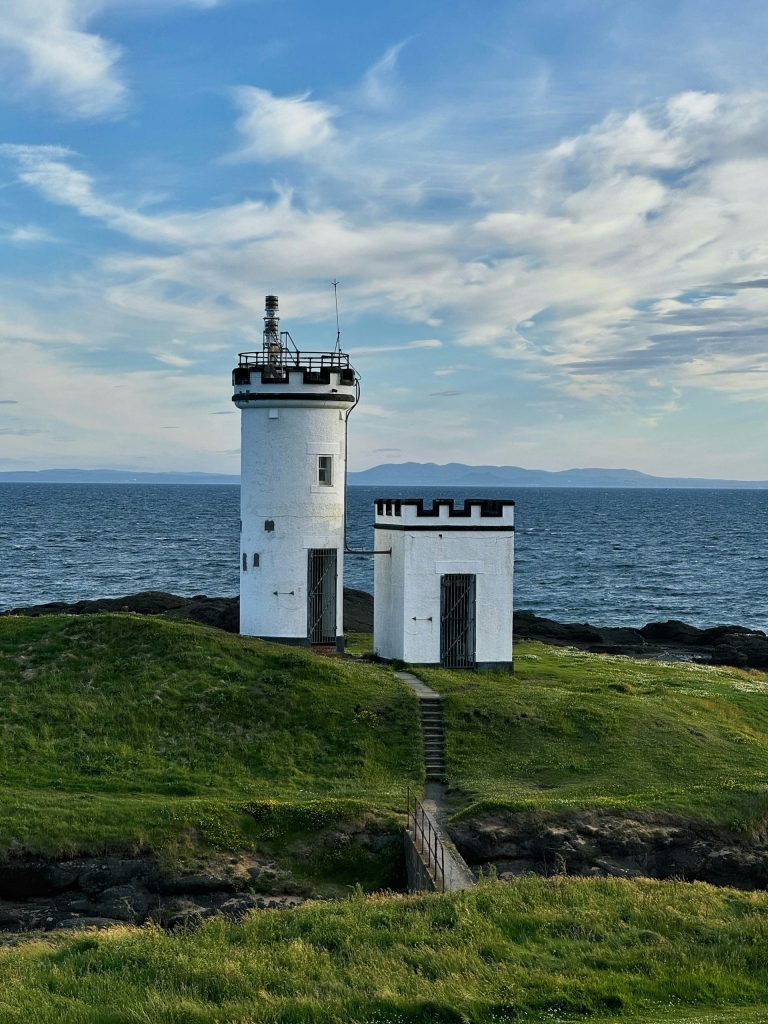
The Fife Coastal Path passes through several fishing villages along the East Neuk, with the section between Elie and St Monans offering a mixture of beaches, rocky shoreline and historic buildings.
Starting at Elie, walkers can visit the sandy beach before following the coastal path east towards the remains of Newark Castle. The route continues past the unusual rock formations at St Monans before reaching the village and its historic church overlooking the sea.
Elie is a popular seaside destination, with a sandy bay, watersports facilities and places to eat. St Monans has a traditional harbour and a number of historic buildings.
Those wanting a longer walk can continue towards Pittenweem and Anstruther, passing further fishing harbours along the coast.
For visitors planning to explore the East Neuk, our Fife cottages by the sea include accommodation within reach of these coastal villages.
2. Stonehaven to Dunnottar Castle, Aberdeenshire
Distance: Approximately 3 miles (5km) for a circular route
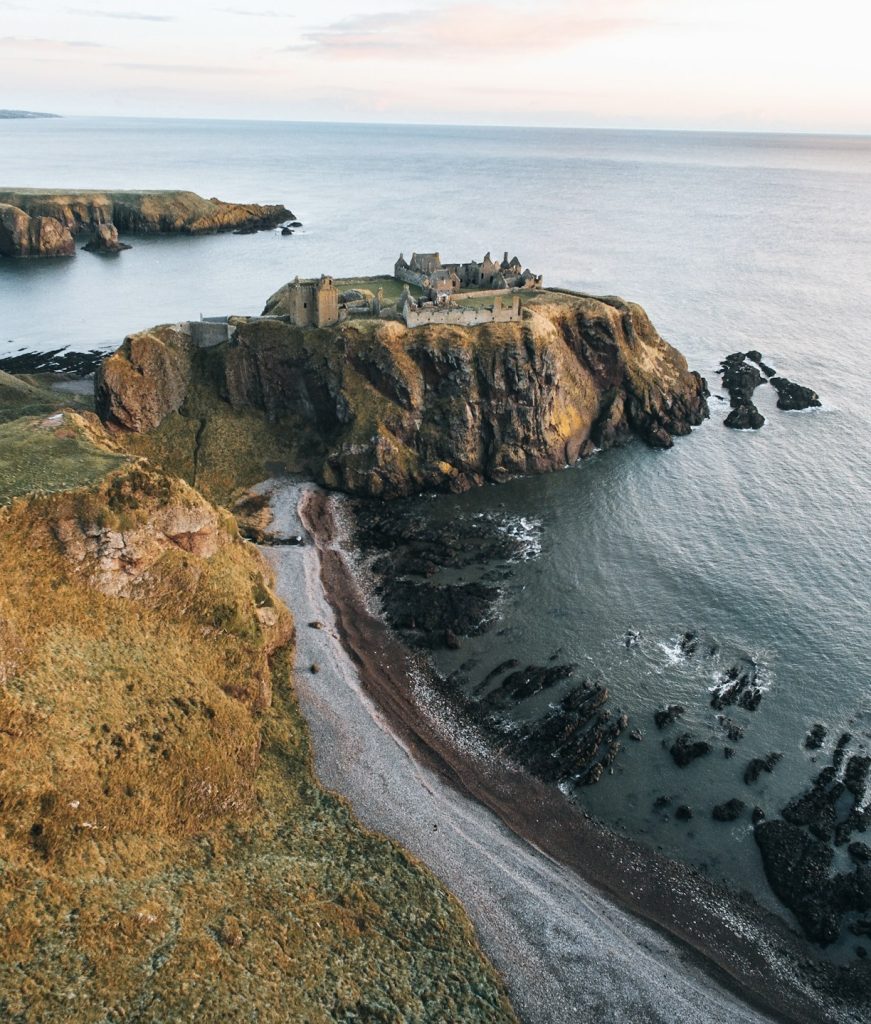
One of the most recognisable coastal walks in Aberdeenshire follows the cliffs south of Stonehaven towards Dunnottar Castle.
The route begins near Stonehaven Harbour, where fishing boats, historic buildings and restaurants line the waterfront. From here, the path climbs onto the cliffs, providing views across the North Sea and back towards the town.
Dunnottar Castle stands on a rocky headland surrounded by steep cliffs. The ruined fortress has a long history and can be reached from the main coastal path.
The walk involves some steep sections and steps, particularly when leaving Stonehaven. Visitors can return along the same coastal route or follow a circular walk that includes sections of minor road.
Stonehaven also has a long beachfront promenade, an outdoor swimming pool and several places to stop for refreshments after the walk.
3. Cullen Bay and Portknockie, Moray Coast
Distance: Approximately 4.5 miles (7.5km) for a circular walk
The Moray coastline has several walking routes connecting fishing villages, sandy beaches and rocky headlands. One of the most interesting is the circular route between Cullen and Portknockie.
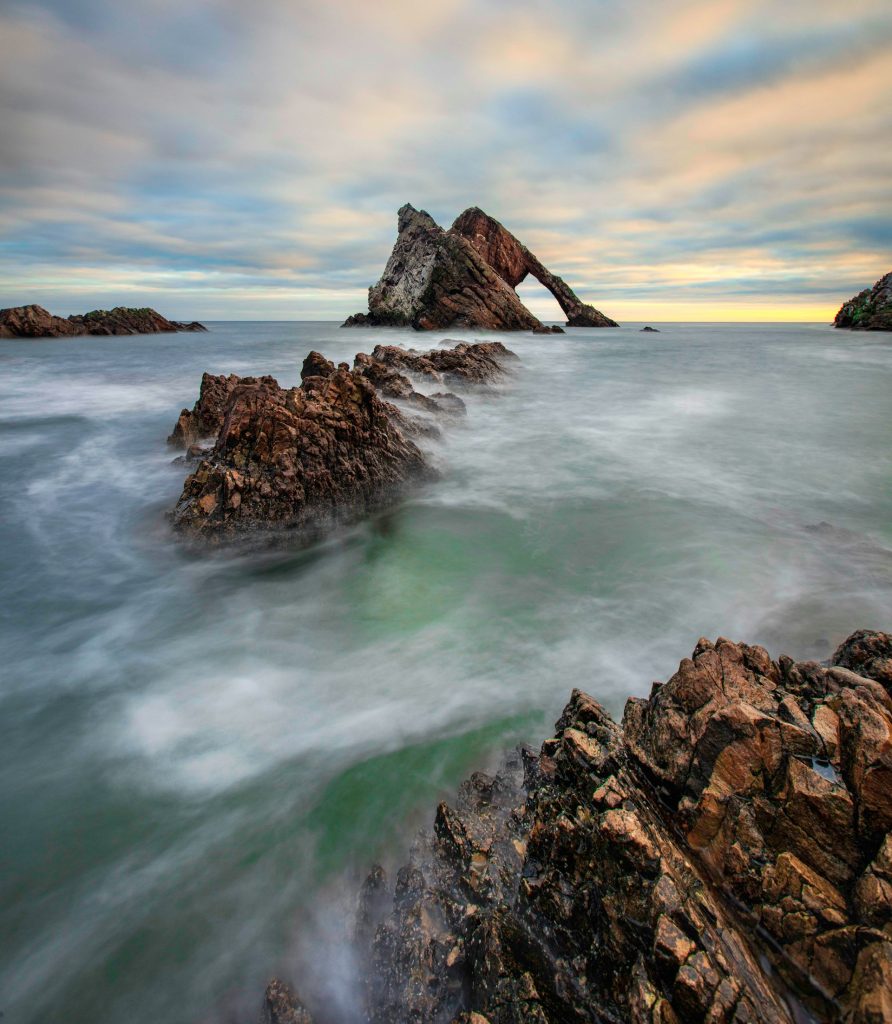
Starting in Cullen, the walk passes the wide sandy beach and continues along the coastline towards Portknockie. Along the way, walkers pass rocky cliffs and the famous Bow Fiddle Rock, a sea stack with a natural arch that resembles the shape of a fiddle bow.
Portknockie is a small fishing village with a harbour overlooking the Moray Firth. The return route follows part of a former railway line, including views across Cullen Bay.
Cullen itself is known for its traditional fishermen’s cottages, railway viaduct and local seafood, particularly Cullen skink.
Other coastal walks nearby connect Findochty, Buckie and Lossiemouth, providing further opportunities to explore this part of northern Scotland. The Moray Coast is also featured in our guide to quiet coastal breaks in the UK, with more information about Cullen, Findhorn and Lossiemouth.
4. Sandwood Bay, Scottish Highlands
Distance: Approximately 8 miles (13km) return
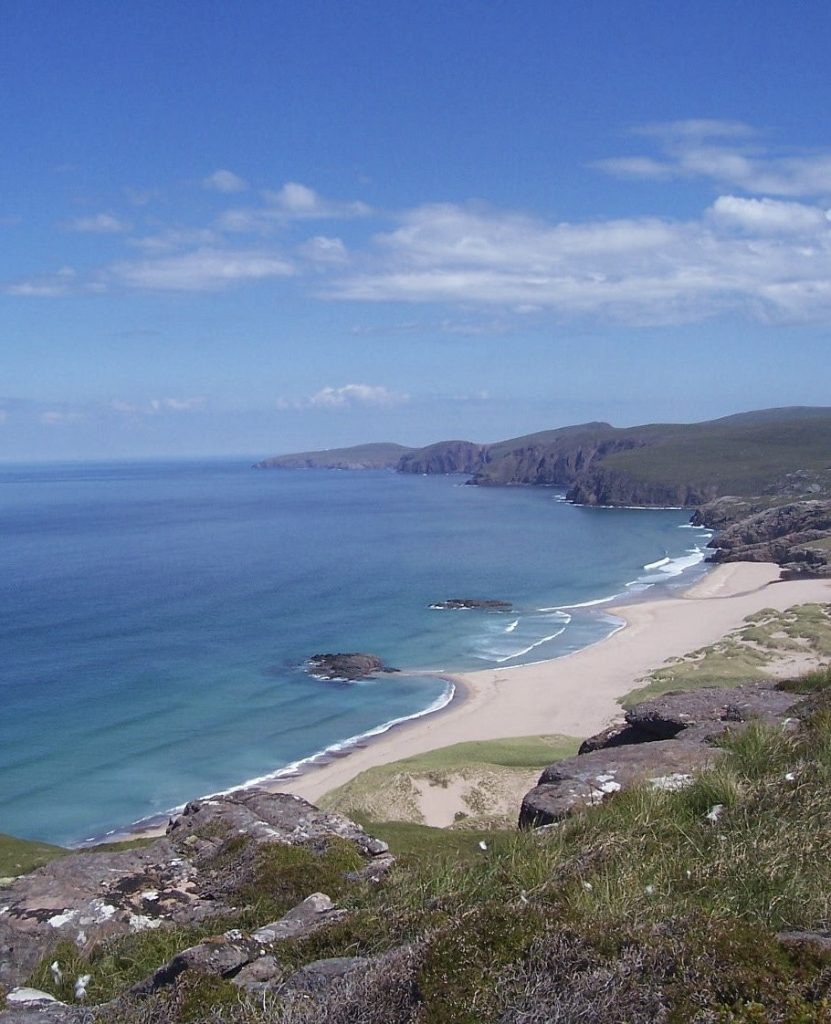
Sandwood Bay is one of Scotland’s most remote beaches, located on the north-west coast of Sutherland. There is no road leading directly to the beach, so visitors must walk across open moorland to reach it.
The usual route begins at Blairmore, near Kinlochbervie, and follows a track for approximately four miles towards the coast.
The beach is backed by large sand dunes and cliffs, with the distinctive Am Buachaille sea stack standing offshore. Sandwood Loch lies behind the dunes, separated from the Atlantic by a narrow strip of land.
Although the route is not particularly steep, the distance and exposed location mean walkers should be prepared for changing weather. There are no cafés, shops or toilets at the beach.
Sandwood Bay is one of several remote coastal destinations in Sutherland. Visitors exploring this part of Scotland can also discover beaches around Durness, Oldshoremore and Achmelvich.
Our collection of Scottish Highlands coastal cottages includes holiday accommodation across northern and western Scotland.
5. St Abbs to Eyemouth, Scottish Borders
Distance: Approximately 3.75 miles (6km) one way
The Berwickshire Coast Path follows a section of coastline in south-east Scotland, passing fishing harbours, cliffs and sandy bays.
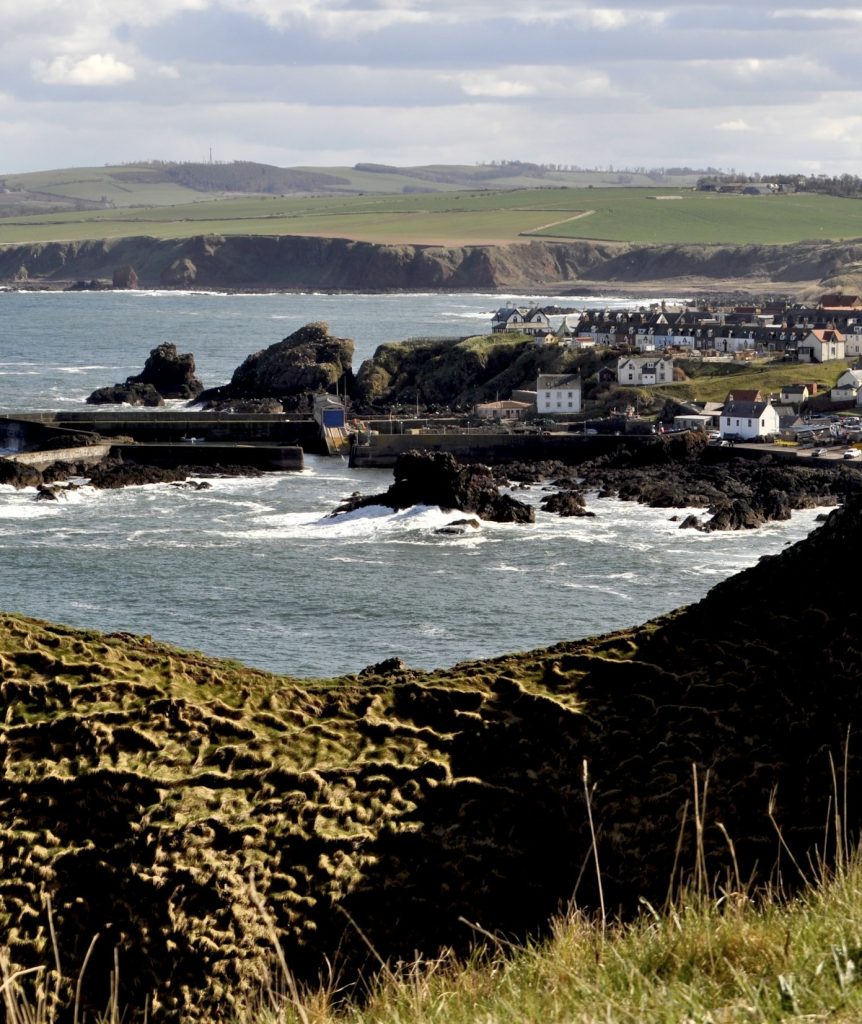
The walk between St Abbs and Eyemouth begins near the small harbour at St Abbs. From here, the path climbs along the cliffs before descending towards Coldingham Bay, a sandy beach surrounded by rocky headlands.
Coldingham Bay is popular with walkers and surfers, with beach huts and access to the nearby village. Beyond the beach, the route follows the coastline towards Eyemouth, passing further cliffs and small coves.
Eyemouth has a working harbour, shops, cafés and a sandy beach close to the town centre. Visitors can also explore Gunsgreen House, an 18th-century building overlooking the harbour.
The route includes narrow clifftop paths and sections that can become muddy after rain. Both St Abbs and Eyemouth have bus connections, making it possible to walk the route in one direction.
6. Kippford to Rockcliffe, Dumfries and Galloway
Distance: Approximately 3.5 miles (5.5km) for a circular walk
The Solway coast in Dumfries and Galloway offers a different type of coastal walking, with wooded paths, small bays and views across tidal estuaries.
The circular walk between Kippford and Rockcliffe begins in Kippford, a small sailing village overlooking the Urr estuary. Its waterfront includes a marina, pubs and cafés.
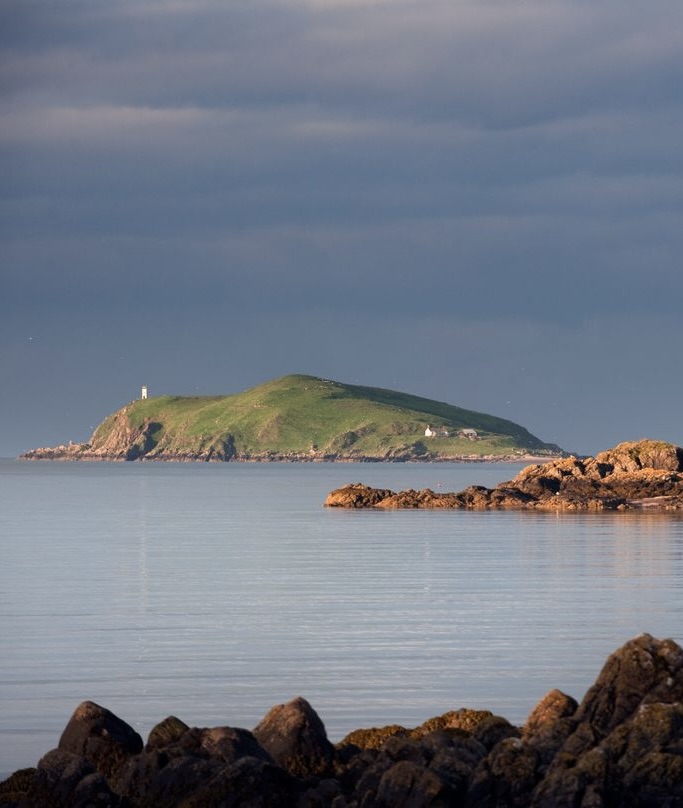
From Kippford, the route follows woodland paths towards Rockcliffe, passing viewpoints overlooking the Solway Firth. Rockcliffe has a small beach and views towards Rough Island, which is managed as a wildlife sanctuary.
At low tide, large areas of sand and mud are exposed along this coastline, attracting a variety of birds. Access to Rough Island is restricted during the bird breeding season, so visitors should check current guidance before attempting to cross.
The route returns through woodland and quiet roads, with optional viewpoints for those wanting to extend their walk.
For a holiday exploring the Solway coastline, our Dumfries and Galloway cottages by the sea provide accommodation near beaches, coastal villages and walking routes.
7. Kildonan Shore, Isle of Arran
Distance: Approximately 2.75 miles (4.25km) return
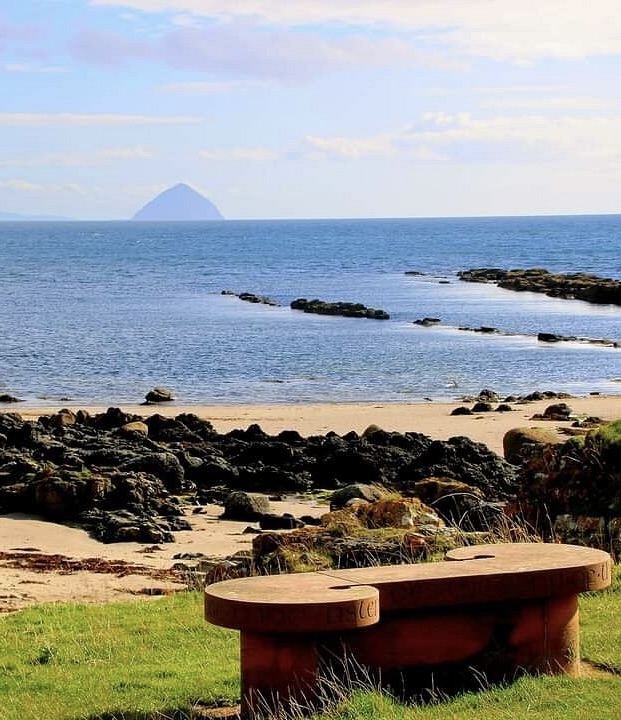
The Isle of Arran has a mixture of sandy beaches, rocky coastline and mountain scenery. The southern coast around Kildonan is particularly interesting for its coastal wildlife and views towards the smaller islands of Pladda and Ailsa Craig.
The Kildonan Shore walk begins at the western end of the village and follows a combination of quiet roads, rough tracks and shoreline paths.
Along the route, walkers pass rocky outcrops, small beaches and waterfalls descending towards the sea. Common seals are regularly seen resting on rocks offshore, while seabirds can also be spotted along the coast.
Kildonan Beach is a good place to explore the shoreline, although some sections are rocky and require care when walking.
Arran has several other coastal walks, including routes around Brodick Bay, Lamlash and Blackwaterfoot. The island can be explored during a longer stay, with ferry connections to the Scottish mainland.
Visitors looking for accommodation nearby can browse our North Ayrshire coastal cottages, including holiday homes on Arran.
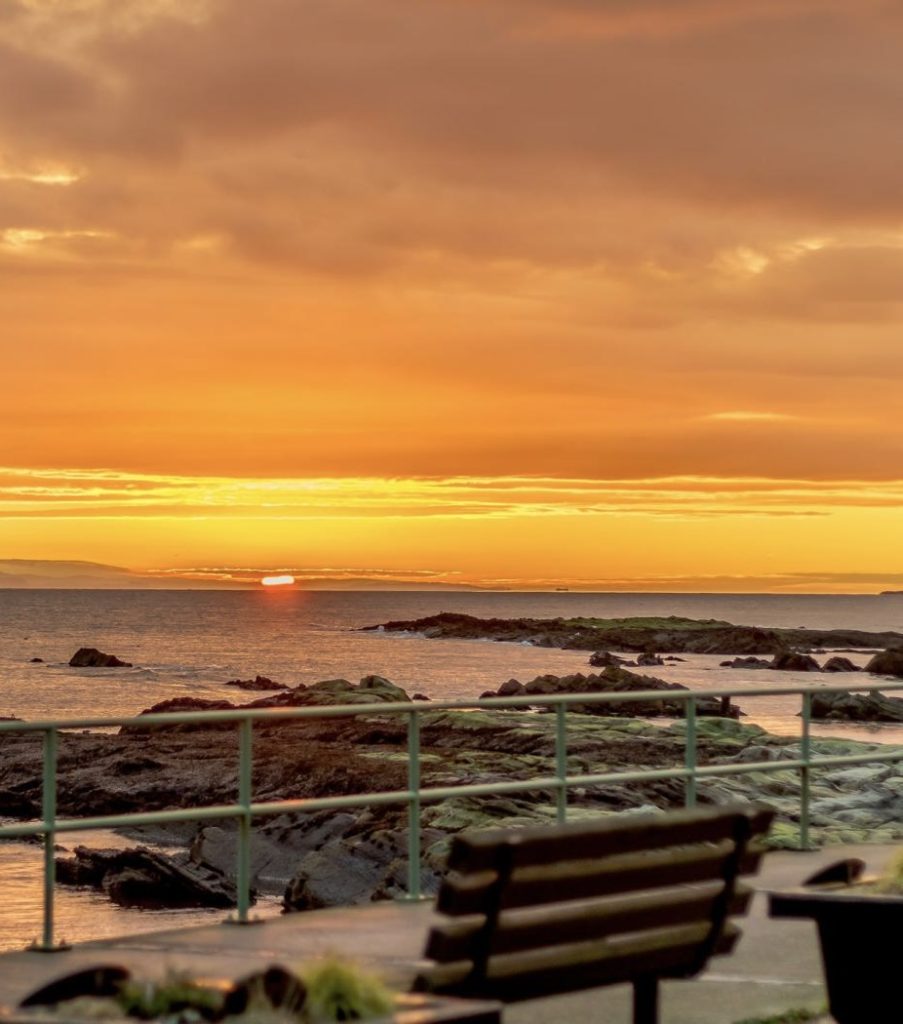
8. St Monans to Anstruther, Fife
Distance: Approximately 3.5 miles (5.75km) one way
Another good section of the Fife Coastal Path connects St Monans, Pittenweem and Anstruther. Unlike some of Scotland’s more remote coastal walks, this route passes through three villages with shops, cafés and other facilities.
Starting at St Monans, the path passes the historic church and continues along the coast towards Pittenweem. The village has a working harbour surrounded by traditional stone houses, with narrow streets leading towards the waterfront.
From Pittenweem, the route continues towards Anstruther, passing sections of rocky shoreline and open views across the Firth of Forth.
Anstruther is one of the largest settlements in the East Neuk, with a busy harbour, seafood restaurants and the Scottish Fisheries Museum.
This walk is a good choice for visitors interested in coastal villages and local history. Regular bus services connect the settlements, allowing walkers to return to their starting point without retracing the route.
Planning a Coastal Walk in Scotland
Scotland’s coastline includes everything from well-maintained paths between seaside towns to remote routes where there are few facilities.
Before setting out, check the distance, terrain and weather forecast. Some walks include steep cliffs, exposed headlands or sections of beach that may be affected by the tide.
For longer routes, carry suitable clothing, water, food and a map. Mobile phone reception can be limited in more remote parts of the Highlands and Scottish islands.
Visitors should also follow the Scottish Outdoor Access Code, particularly when walking near livestock, wildlife habitats and protected coastal areas.
Many Scottish beaches are also worth visiting outside the summer months. Our guide to the best UK beaches for winter walks includes West Sands at St Andrews and Luskentyre in the Outer Hebrides.
If you’re planning several walks during your holiday, staying near the coast can reduce the amount of driving required each day. Our Scotland cottages by the sea include accommodation close to beaches, coastal paths and seaside villages across the country.